
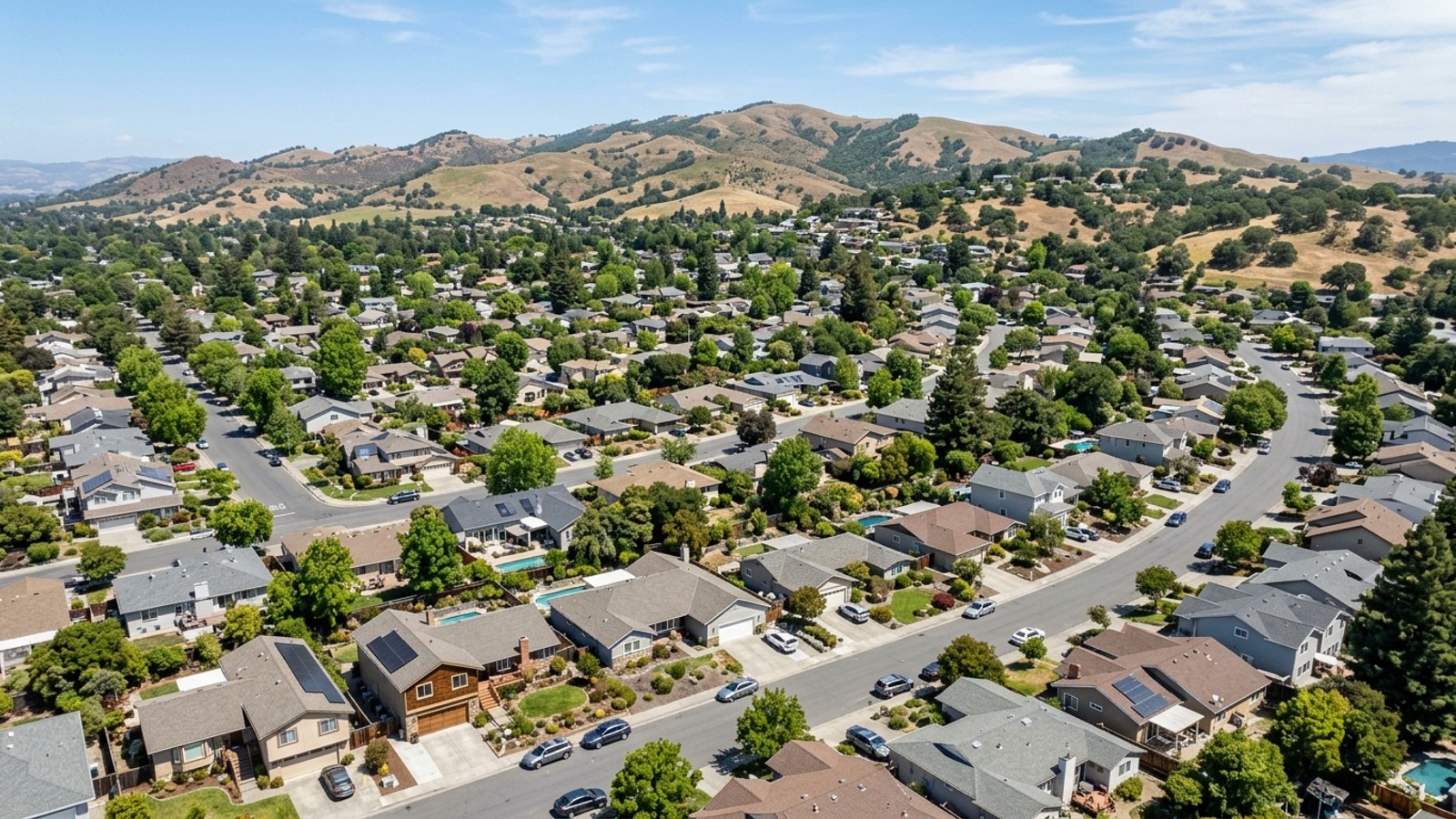
The median home sale price in Santa Rosa, CA sits around $749,500, with homes spending roughly 40 days on the market before closing. There are about 387 properties currently available across the city. Rent spans a wide range depending on where you land and what you’re renting – citywide median estimates run from $1,848 to over $2,400 per month. Whether you’re buying or leasing, living in Santa Rosa, CA means joining a Sonoma County city that runs on a mix of tech, healthcare, and wine industry work that’s worth understanding before you sign anything.
Working and Living in Santa Rosa, CA
The overall cost of living in Santa Rosa runs about 10% above the national average. Major employers span municipal government, healthcare, tech manufacturing, food production, and education – so the economy isn’t propped up by a single industry, which matters when you’re deciding whether to bet a mortgage on this place.
A lot of residents work right here in the city, which cuts down the pressure to commute south toward the Bay Area. That’s not nothing.
Top Employers and Industries
Healthcare and tech account for a significant share of local jobs. On the medical side, you’re looking at Sutter Health, Kaiser Permanente, and Santa Rosa Community Health. Keysight Technologies and Medtronic CardioVascular both maintain large presences on the tech and manufacturing side. Food and wine production round things out – Amy’s Kitchen and Jackson Family Wines are the names you’ll hear most. The City of Santa Rosa and Santa Rosa Junior College are the major institutional employers rounding out the list.
Cost of Living and Typical Rent
Rent-tracking sites put current average apartment rents somewhere between $2,400 and $2,450 per month, which runs roughly 19% to 23% above the national average. The U.S. Census Bureau’s recent American Community Survey puts median gross rent lower, at about $2,084 per month. Apartment List data from August 2026 shows a citywide median of $1,848, reflecting a 3% year-over-year decrease.
The variation is real, not a data error. What you actually pay will depend on the specific neighborhood and building amenities you choose.
Lifestyle and Social Scene
Downtown Santa Rosa and the historic Railroad Square district are where most of the restaurants, bars, and shops are concentrated. The SOFA (South of A Street) Arts District is the other main cultural destination – it hosts over 30 artist studios and galleries, and tends to draw a crowd looking for something beyond the standard bar scene.
Neighborhoods and Transit Access
Santa Rosa holds a citywide Walk Score of 47, so most residents rely on cars for daily errands. That’s just the reality. Specific districts do considerably better, though, and if walkability matters to you, where exactly you land in the city makes a meaningful difference.
The city has several distinct named districts: Downtown, Railroad Square Historic District, Cherry Street Historic District, and the St. Rose District. Other notable areas include Montgomery Village, Fountaingrove, Bennett Valley, Rincon Valley, and Oakmont.
Walkability and Commuting
According to Walk Score, the most walkable neighborhoods are St. Rose, the Juilliard Park Neighborhood Watch area, and the West End – all places where you can realistically reach a cafe or shop without getting in your car.
For regional travel, the SMART (Sonoma-Marin Area Rail Transit) commuter rail connects Sonoma and Marin counties. The West End has walkable access to a SMART train station. Downtown and Railroad Square sit directly across from the Santa Rosa Downtown station. There are additional stops near the Charles M. Schulz Museum at Santa Rosa North and another station serving the Sonoma County Airport area along the Highway 101 corridor.
Rent Prices by Area
Rent.com reports that Fountaingrove is the most expensive neighborhood, with a one-bedroom averaging around $2,819 per month. Downtown Santa Rosa and the West End come in lower, near $2,064. The Memorial Hospital Neighborhood averages about $1,926, Montgomery Village sits around $1,800, and the Junior College area offers some of the lowest rents in the city at approximately $1,400.
Neighborhood Development
The West End has gone through significant revitalization – new development mixed in with historic buildings – and it stays popular with renters who want that combination. Roseland is frequently described as a dynamic neighborhood undergoing new development and investment, and it’s also widely cited as one of the more affordable areas in the city, alongside the Northwest (NW) Santa Rosa area.
Buying a Home in Santa Rosa
In a single recent month, 136 homes sold in Santa Rosa – the market moves. The median sale price sits at around $749,500. Homes are spending about 40 days on the market, sellers are receiving approximately 100% of their list price on average, and 36% of homes are selling above asking.
That last number is the one worth paying attention to.
Inventory and Market Pace
There are currently about 387 available homes across the city, which works out to roughly 2.8 months of supply. That puts you in a slightly competitive market where well-priced homes don’t sit around. If you find something that fits your budget, you’ll want to move decisively – and having your financing sorted before you start touring will put you in a much stronger position when a third of homes are going over list price.
Getting Around and Settling In
Sonoma County Transit runs bus routes connecting Santa Rosa to surrounding towns and the regional airport. Local trips often require a vehicle or bus service – the SMART train handles north-south regional travel, but it doesn’t cover everything. For cyclists, a bike and pedestrian pathway runs alongside the SMART rail tracks, giving you a separated route for non-motorized travel through the city.
Balancing Commute and Budget
The tradeoff here is straightforward: the Junior College area might save you hundreds per month on rent, but you’ll likely need a car to reach employers in Fountaingrove or along the Highway 101 corridor. A Downtown or West End apartment costs more, but puts you within walking distance of the SMART train and the Railroad Square dining scene – and if that proximity lets you go car-free or cut driving significantly, the math can work out in your favor.
There’s no universal right answer. It depends on where you work and how much your time is worth.
Frequently Asked Questions
What are the best neighborhoods in Santa Rosa, CA for young professionals to buy or rent?
Downtown, the West End, and the St. Rose District offer the highest walkability and closest access to dining and the SMART train. For more affordable rent, the Junior College area and Memorial Hospital Neighborhood offer lower monthly costs.
Is buying a starter home in Santa Rosa affordable for a single-income professional?
It depends on your income and down payment. The median home sale price in Santa Rosa is approximately $749,500, which requires a substantial mortgage that may stretch a single income.
How does the commute from Santa Rosa to San Francisco work for hybrid employees?
Hybrid workers can use the SMART commuter rail to travel south through Sonoma and Marin counties. Santa Rosa also sits directly along the Highway 101 corridor for those driving south.
What is the social scene and nightlife like for millennials moving to Santa Rosa?
The social scene centers around Downtown Santa Rosa and the historic Railroad Square district, which have the city’s highest concentration of restaurants and bars. The SOFA Arts District adds a cultural layer with its collection of over 30 artist studios and galleries.
Are there good local job opportunities in Santa Rosa, CA if I don’t want to commute down the 101?
Yes – Santa Rosa has a solid local economy. Major employers include Sutter Health, Medtronic CardioVascular, Keysight Technologies, and the City of Santa Rosa.
How does living in Santa Rosa compare to Petaluma for young professionals looking to buy a house?
Both cities are in Sonoma County and share access to the SMART train line. Santa Rosa is further north and has major employers like Sutter Health and Keysight Technologies located within its city limits.