
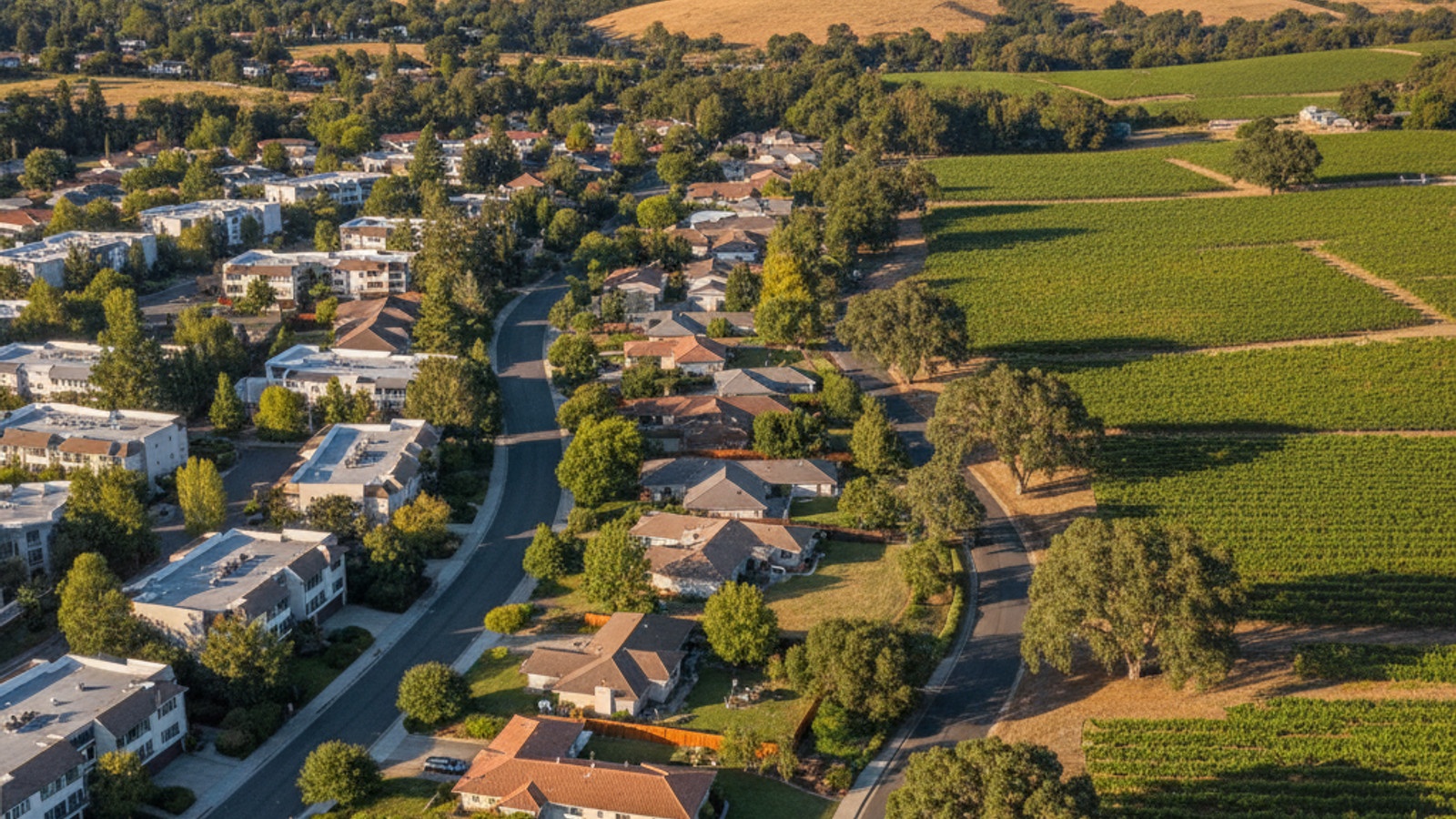
Sonoma County’s largest city offers a distinct blend of agricultural heritage and modern infrastructure. Relocating here means navigating a dynamic housing landscape shaped by both natural beauty and regional economic shifts.
Buyers looking at living in Santa Rosa, CA need to understand the nuances of the local market, from insurance requirements to transit expansions. This guide provides a clear look at what the city offers and what you should budget for in 2026.
Living in Santa Rosa: An Overview of Sonoma County’s Hub
Positioned just 55 miles north of San Francisco, Santa Rosa serves as the primary commercial and cultural center for the North Bay. The city acts as a gateway to the Napa Valley AVA and the broader Wine Country, offering immediate access to both agricultural acreage and the Pacific coastline.
The geography of the area provides a moderate, Mediterranean climate that allows for year-round outdoor activities. Residents experience warm, dry summers and cool, wet winters without the extreme temperature fluctuations found further inland.
This strategic location makes the city highly practical for those who need access to major Bay Area employment centers but prefer a less dense environment. The local landscape is defined by rolling hills, vineyards, and mature oak trees that integrate directly into residential neighborhoods.
Santa Rosa Real Estate and Cost of Living in 2026
The cost of living in Santa Rosa remains higher than the national average, driven primarily by housing and utility expenses. With a median household income hovering around $94,462, buyers must carefully evaluate their purchasing power in this specific market.
Homeowner insurance is a critical factor that every buyer must address early in the transaction process. Following the historical impact of the Tubbs Fire, properties in designated wildfire zones often require specialized or state-backed insurance policies that add significantly to monthly carrying costs.
Anyone entering this market must budget an additional cushion for these specialized insurance premiums and higher-than-average utility rates. Failing to account for these localized expenses is a common mistake that can easily derail a home purchase late in the escrow period.
Current Housing Market Trends
Median home prices currently sit between $750,000 and $780,000, reflecting a steady market with consistent demand. Inventory levels remain tight, meaning properly priced homes frequently sell at or near their list price within the first few weeks.
The architectural landscape includes a mix of mid-century single-family homes in established areas and newer condominium developments governed by HOAs. Neighborhoods like Rincon Valley and Fountaingrove offer distinct property types, ranging from ranch-style layouts to multi-level modern builds.
Average Rent and the Rental Market
For those choosing to lease before buying, average rent prices range from $2,300 to $2,500 per month. The rental market maintains a low vacancy rate, requiring prospective tenants to act quickly when quality units become available.
Leasing a modern apartment in the downtown core typically commands a premium compared to single-family homes in the surrounding suburban rings. This price difference reflects the growing demand for walkable access to transit and commercial centers.
Getting Around: Commuting and Public Transportation
Transportation infrastructure in Sonoma County relies heavily on the Highway 101 corridor, which serves as the primary artery for both local and regional travel. Commute times fluctuate significantly during peak morning and evening hours, requiring residents to plan accordingly when traveling south toward San Francisco.
The Sonoma-Marin Area Rail Transit, known as the SMART train, has fundamentally changed regional mobility by providing a reliable alternative to highway driving. The system connects key residential nodes with major employment centers, featuring modern cars equipped with Wi-Fi and bicycle storage.
Recent expansions have further integrated the city into the broader Bay Area transit network. The mid-2025 opening of the Windsor extension successfully expanded the line north, and current planning is underway for the planned 2028 Healdsburg extension.
Top Amenities, Parks, and Recreation
Santa Rosa features a robust network of public spaces and commercial districts that support an active lifestyle. The city integrates large-scale natural reserves directly into the municipal footprint, providing immediate access to hiking and cycling trails.
Commercial amenities are equally accessible, with multiple distinct districts offering locally sourced food, craft breweries, and daily necessities. The layout of the city ensures that most residential areas are within a short drive of major retail centers and outdoor recreation.
Residents have access to several notable parks and shopping destinations that anchor the local community. These key locations provide a mix of outdoor and retail experiences:
- Trione-Annadel State Park, offering extensive trails for mountain biking and horseback riding.
- Spring Lake Regional Park, featuring a swimming lagoon, boating facilities, and campsites.
- Howarth Park, which connects to Spring Lake and includes an amusement area and tennis courts.
- Downtown Santa Rosa, serving as the central hub for dining, entertainment, and transit.
- Montgomery Village, an open-air shopping center known for boutique retail and local dining options.
Education and Healthcare Facilities
Institutional infrastructure is a major consideration for anyone relocating, and Santa Rosa provides comprehensive options for both education and medical care. Santa Rosa City Schools operates as the primary public school district, managing numerous campuses across the city.
The district recently completed a major 2025-2026 restructuring program designed to optimize resources and update academic offerings. This initiative included transitioning campuses like Elsie Allen into specialized magnet schools to focus on distinct career and academic pathways.
Higher education and healthcare are anchored by established regional institutions. Santa Rosa Junior College provides extensive degree and certificate programs, while nearby Sonoma State University offers four-year undergraduate and graduate degrees.
For medical needs, residents rely on Santa Rosa Memorial Hospital, which serves as a Level II trauma center. The facility is supported by a wider network of specialized clinics and outpatient centers distributed throughout the county.
Frequently Asked Questions About Moving to Santa Rosa
What is the cost of living in Santa Rosa, CA?
The cost of living sits above the national average, largely due to housing prices and utility rates. Residents should anticipate median home values around $750,000 to $780,000 in 2026. Specialized property insurance also adds a recurring monthly expense that must be factored into any budget.
Is it expensive to live in Santa Rosa, CA?
Yes, expenses here are generally higher than national benchmarks, though they remain slightly more manageable than in San Francisco. Buyers need an income that aligns with the local median of approximately $94,462 to comfortably cover housing and transportation. Everyday goods and groceries also reflect the premium pricing typical of the West Coast.
What is the weather like in Santa Rosa, CA?
The city enjoys a Mediterranean climate characterized by dry, warm summers and cool, wet winters. Temperatures rarely reach freezing, allowing for year-round outdoor recreation and agricultural production. This stable weather pattern is a primary driver of the local wine industry.
What is the job market like in Santa Rosa, CA?
The local economy is driven by agriculture, healthcare, and regional tourism, providing a stable employment base. The unemployment rate generally mirrors the broader state average, with consistent demand for skilled professionals in medical and educational sectors. Commuters also have access to remote or hybrid roles based out of the wider Bay Area.