Santa Rosa serves as the economic and cultural hub of Sonoma County, sitting roughly 55 miles north of San Francisco. The city offers immediate access to world-renowned vineyards, dense redwood forests, and the rugged Pacific Ocean coastline. Many buyers look here when they want to stay connected to the San Francisco Bay Area while gaining more space and access to outdoor recreation.
Relocating to this part of Wine Country means adjusting to a distinct local real estate market with its own pricing tiers and environmental considerations. Buyers moving to Santa Rosa, CA, will find a mix of dense downtown condo developments, established mid-century tracts, and newer hillside builds. Understanding the localized costs, commute routes, and insurance requirements will help you identify the right property for your budget.
The region has evolved considerably over the past decade, shifting from a quiet agricultural center into a modern suburban destination. New infrastructure projects and transit expansions have made the area increasingly accessible for hybrid workers who split their time between the city and the broader Bay Area. Reviewing the specific dynamics of the local housing stock will clarify what you can expect to spend.
Housing Costs and Daily Expenses
The median home price in Santa Rosa sits between $750,000 and $788,000 as of the spring 2026 market. This pricing places the city well above the national average, though it remains notably more affordable than San Francisco and much of the greater Bay Area. Buyers can find entry-level condos near the city center, mid-range single-family homes in established tracts, and premium properties on larger lots near the city limits.
Renters entering the market can expect to pay an average of $2,305 per month for an apartment. Daily expenses, including utility bills, groceries, and transportation, also trend higher than the national baseline.
Property taxes in California follow a specific assessment model, generally locking in your base rate at the time of purchase. Buyers should anticipate an annual property tax bill equal to roughly 1% to 1.2% of the home’s purchase price. Additional local parcel taxes or special assessment districts may apply depending on the specific street you choose.
Popular Neighborhoods to Consider
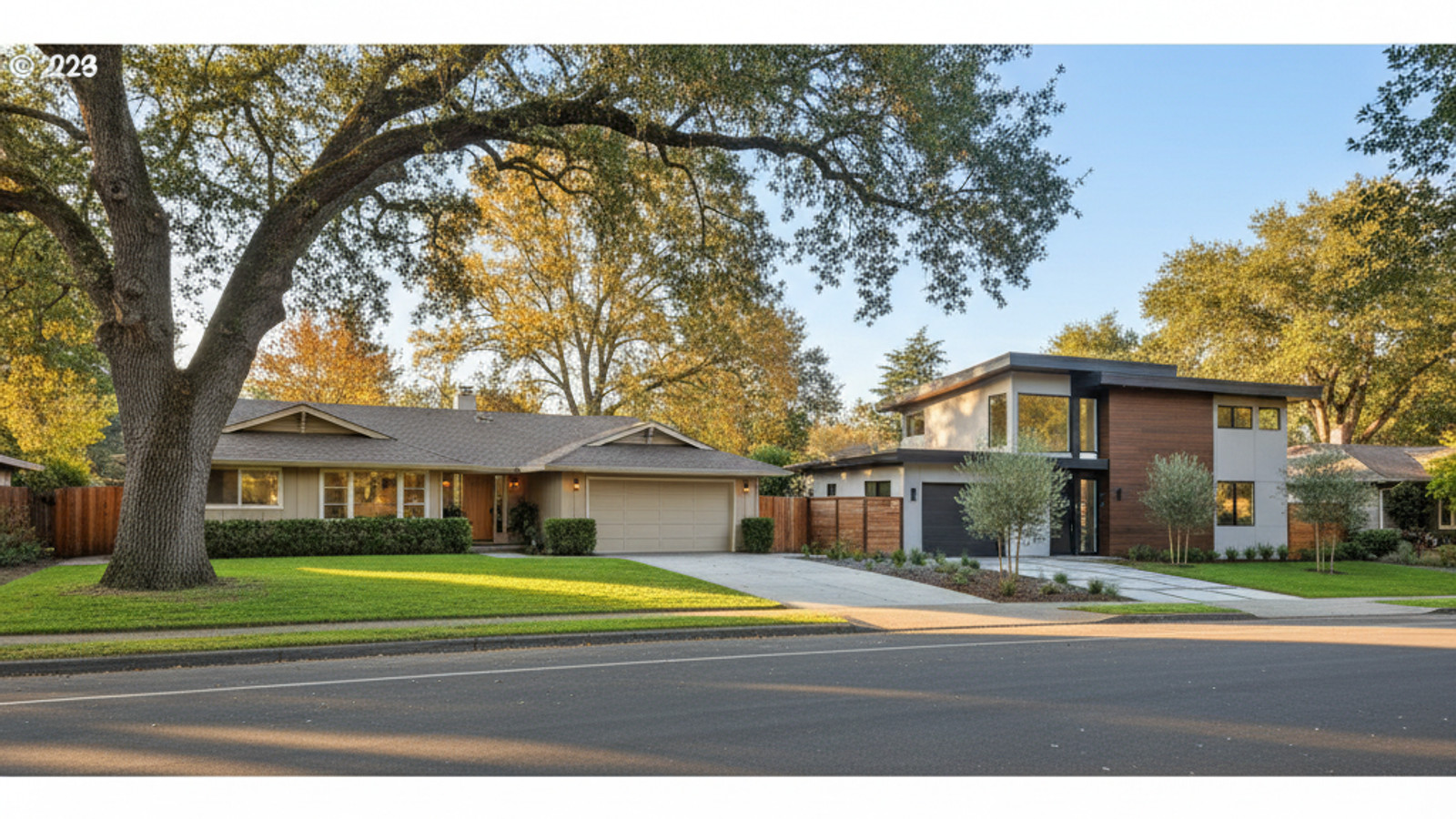
Rincon Valley occupies the northeastern edge of the city and features wide streets, established tree canopies, and immediate access to local parks. Buyers often look here for mid-century single-family homes situated on generous lots. The area provides straightforward access to Highway 12, making it convenient for those who travel toward Sonoma or the local state parks.
Fountaingrove sits in the eastern hills and offers a completely different housing inventory. Following the 2017 Tubbs Fire, this area saw extensive rebuilding, meaning the current market consists primarily of newer construction homes with modern energy standards and updated building codes.
Downtown Santa Rosa appeals to those who prefer a denser, walkable environment close to restaurants, retail, and transit. The downtown district features a mix of historic bungalows, newer apartment complexes, and condominium units. Living in the core of the city puts you within blocks of local coffee shops, craft breweries, and the central transit mall.
Bennett Valley is another prominent area located in the southeastern quadrant of the city. This neighborhood centers around the local golf course and offers a mix of attached townhomes and detached single-family residences. Residents here enjoy quick access to Annadel State Park and shorter drive times to neighboring Petaluma.
Local Job Market and Top Employers
Santa Rosa’s economy centers on healthcare, agriculture, and advanced manufacturing. The healthcare sector provides a massive portion of local jobs, with Providence Santa Rosa Memorial Hospital and Kaiser Permanente operating as two of the largest employers in the region. Medical professionals often find strong employment opportunities within these extensive hospital networks and their affiliated outpatient centers.
The technology and engineering sectors also maintain a strong footprint in the city. Keysight Technologies operates its global headquarters here, employing thousands of engineers, researchers, and corporate staff. Beyond these major corporate centers, the surrounding wine industry and agricultural businesses support a broad network of hospitality, logistics, and management roles.
Local government and education also provide substantial employment stability for the region. The city and county administrative offices operate out of Santa Rosa, employing thousands of civil servants, planners, and public works professionals. This diverse economic base helps insulate the local market from downturns in any single industry.
Getting Around Sonoma County and Beyond
U.S. Route 101 serves as the primary transportation corridor through Santa Rosa, connecting the city to San Francisco to the south and Mendocino County to the north. Most residents rely on a car for daily errands and commuting, and traffic along the 101 corridor routinely backs up during peak morning and evening hours. Buyers should test their expected commute during rush hour before committing to a specific neighborhood.
For regional transit, the Sonoma-Marin Area Rail Transit (SMART) train provides a reliable alternative to highway driving. The SMART train runs from northern Sonoma County down to the Larkspur ferry terminal, with multiple stops within Santa Rosa itself. A typical rail commute from Santa Rosa to San Rafael takes roughly 1 hour and 4 minutes, allowing workers to bypass highway congestion entirely.
From the Larkspur station, commuters can transfer to the Golden Gate Ferry for a direct water route into downtown San Francisco. Local bus networks, including Santa Rosa CityBus and Sonoma County Transit, provide localized routes connecting residential neighborhoods to commercial centers. Cyclists will also find a growing network of dedicated bike lanes and multi-use paths throughout the city.
Public Schools and Higher Education
The Santa Rosa City Schools district operates the majority of the public educational facilities within the city limits. This district includes several specialized magnet programs, charter schools, and traditional campuses like Maria Carrillo High School.
In addition to the public system, the area hosts numerous private educational institutions spanning from primary grades through high school. These private facilities offer alternative curriculums, specialized arts programs, and varied athletic opportunities. Parents often factor the location of these specific campuses into their housing search to minimize morning drop-off times.
The city also serves as a prominent hub for higher education and vocational training. Santa Rosa Junior College sits near the downtown core and provides extensive certificate programs, associate degrees, and transfer pathways. Just a few miles south in Rohnert Park, Sonoma State University offers undergraduate and graduate degree programs, employing hundreds of local academics and administrative staff.
Parks, Wineries, and Outdoor Activities
Access to outdoor recreation stands out as a primary reason people relocate to Sonoma County. Trione-Annadel State Park and Spring Lake Regional Park sit on the eastern edge of the city, offering miles of hiking trails, mountain biking routes, and paved walking paths. Adjacent to these is Howarth Park, which features a lake for paddleboarding, extensive playgrounds, and sports fields.
The local culture is deeply tied to the surrounding agricultural landscape. Residents have immediate access to world-class vineyards, wine tasting rooms, and farm-to-table dining establishments throughout the city and surrounding county. In the downtown district, venues like the Luther Burbank Center for the Arts and the Santa Rosa Symphony provide year-round live music and theatrical performances.
Weekend activities often revolve around the local food and beverage scene. Several farmers’ markets operate weekly throughout the city, connecting residents directly with local growers and artisan food producers. The Russian River sits just a short drive to the west, providing additional opportunities for kayaking, swimming, and seasonal recreation.
Weather, Wildfires, and Home Insurance
Santa Rosa experiences a classic Mediterranean climate featuring dry, warm summers and cool, wet winters. Temperatures rarely drop below freezing, and snow is practically nonexistent on the valley floor. However, the prolonged dry season from May through October creates conditions that require specific property maintenance and landscaping strategies.
Wildfires remain a persistent reality for the region, and the legacy of the 2017 Tubbs Fire continues to shape local real estate policies. State and local building codes now require fire-resistant materials for new construction, and property owners must maintain defensible space around their homes. Buyers should request insurance quotes during their inspection contingency period, as properties located in designated fire hazard severity zones often face elevated premiums or require coverage through the California FAIR Plan.
Winter storms occasionally bring heavy rain and localized flooding to properties situated near Santa Rosa Creek and its tributaries. Buyers looking at parcels in lower-lying areas should check current FEMA flood maps to determine if flood insurance will be required by their lender. Understanding these environmental factors upfront helps prevent unexpected expenses after closing.
Frequently Asked Questions
Is Santa Rosa an expensive place to live?
Living costs in Santa Rosa sit above the national average, driven largely by housing prices and utility rates. While a median home price near $788,000 requires a substantial budget, the city remains a more affordable alternative to San Francisco or San Jose. Everyday expenses like groceries and gas also reflect the broader California pricing baseline.
What are the best neighborhoods to live in Santa Rosa?
Choosing an area depends on your daily routine and preferred housing style. Buyers who want immediate access to Highway 12 and large, flat lots often target Rincon Valley. Those looking for modern energy-efficient builds look to the Fountaingrove hills, while commuters utilizing the SMART train tend to prefer the historic bungalows near the city center.
How is the job market in Santa Rosa?
The local employment base is anchored by healthcare, advanced manufacturing, and the wine industry. Major employers like Keysight Technologies and Kaiser Permanente provide stable, high-paying roles for local residents. The area maintains steady employment rates, though many residents also utilize regional transit to access hybrid roles in the broader Bay Area.
What is the crime rate in Santa Rosa, CA?
Property crime rates in Santa Rosa generally align with averages for cities of similar size in California. Violent crime rates remain comparatively low, though statistics vary noticeably from one census tract to another. Buyers should review the local police department’s public mapping tools to see specific incident reports for their target streets.