
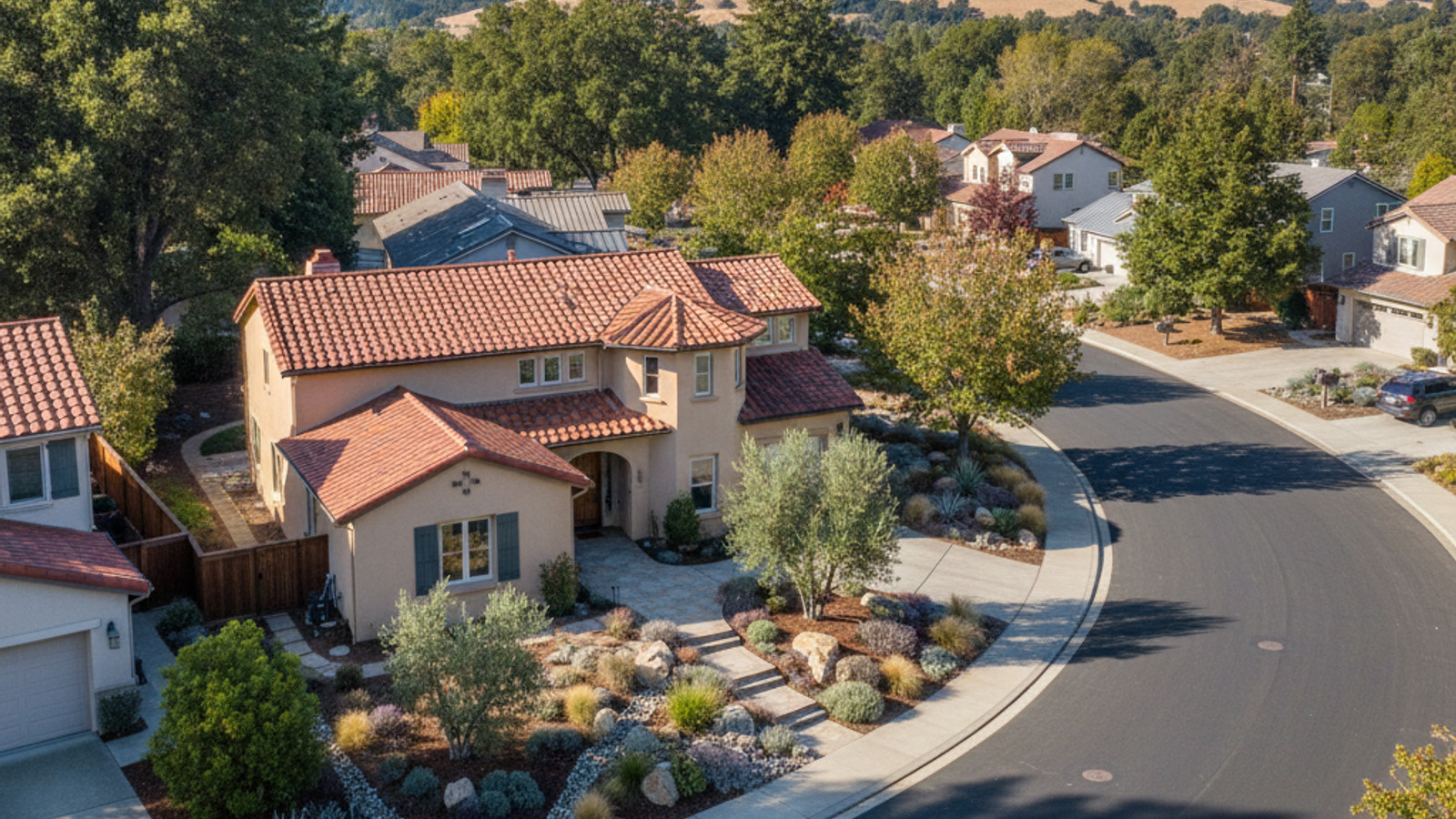
Santa Rosa averages 256 sunny days a year, placing it well above the national average for clear skies. The region falls under a Mediterranean climate classification, defined by long, dry summers and cool, wet winters. This consistent weather pattern shapes everything from the type of roof you install to the drought-resistant landscaping in your front yard.
Fog rolling in from the Pacific Ocean acts as a natural air conditioner during the warmer months. This marine layer typically blankets the area in the late evening and burns off by mid-morning. Buyers looking at Sonoma County properties often find that this daily cooling cycle keeps energy bills manageable compared to cities further inland.
Year-Round Temperatures and Rainfall Patterns
Summer temperatures in the city peak around an average high of 83 degrees Fahrenheit in July and August. Once the sun goes down, nighttime lows drop comfortably into the low 50s. These warm days and cool nights create the ideal environment for the wine grapes grown throughout the surrounding area.
Winter shifts the pattern toward cooler, wetter conditions starting in late November. Daytime highs hover near 58 degrees Fahrenheit, while nighttime lows often dip into the mid-40s or high 30s. The Santa Rosa plain receives about 30 to 32 inches of rain annually, with the vast majority falling between December and March.
Measurable snowfall remains extremely rare on the valley floor. While the peaks of nearby mountains might see a light dusting during a cold winter storm, residents in the city rarely need to worry about shoveling driveways. Homeowners focus their winter maintenance on clearing gutters and managing stormwater runoff instead.
How Microclimates Affect Local Properties
Sonoma County features distinct microclimates driven by varying elevations and proximity to the Sonoma Coast. A house just a few miles west of U.S. Route 101 can experience afternoon temperatures five to ten degrees cooler than a home on the eastern side of town. The coastal fog struggles to push over the hills, leaving inland properties exposed to more direct afternoon heat.
These temperature variations dictate how residents approach home cooling and landscaping. Properties on the valley floor often require robust HVAC systems to handle late-summer heat waves. Meanwhile, homes located in shaded canyons or closer to the coast might rely entirely on open windows and ceiling fans.
Valley Floors and Inland Heat
Neighborhoods situated on the flat valley floors experience the highest summer temperatures in the city. The lack of an ocean breeze means the heat lingers longer into the evening before the marine layer arrives. Homebuyers looking in these areas should prioritize properties with modern insulation and energy-efficient windows.
Landscaping in these warmer zones favors xeriscaping and drought-resistant native plants. Reducing grass lawns lowers water bills during the dry summer months and requires less maintenance year-round.
Fountaingrove and Higher Elevations
Homes in higher elevation neighborhoods like Fountaingrove face different weather dynamics. These properties sit above the typical fog line, meaning they receive more direct sunlight during the morning hours. They also experience stronger prevailing winds moving through the canyons.
The combination of wind and dry vegetation requires homeowners in these elevated areas to pay close attention to exterior maintenance. Roofs and siding take more direct weather exposure, and wind patterns play a major role in how defensible space is managed.
Wildfire Hazard Zones and Property Insurance
The Tubbs Fire in 2017 fundamentally changed local building codes and property management expectations. Homes built or renovated in recent years feature fire-resistant roofing, tempered glass windows, and enclosed eaves to prevent ember intrusion. Buyers moving into the area should factor these construction standards into their property search.
Living in a designated Wildland Urban Interface or a high fire hazard severity zone impacts both property maintenance and insurance. Homeowners in these zones face higher premiums and are required to secure coverage through specific carriers or the California FAIR Plan. The City of Santa Rosa also enforces vegetation management ordinances to reduce fuel loads around residential structures.
The 2026 Zone 0 Defensible Space Rules
As of 2026, new state-mandated defensible space rules require an ember-resistant zone within five feet of any structure. This Zone 0 regulation prohibits combustible materials, including wood mulch, wooden fences attached to the house, and certain types of vegetation, directly against the foundation. Buyers purchasing older homes should budget for landscaping updates to meet this standard.
Compliance with Zone 0 is a mandatory step during many real estate transactions. Inspectors will flag non-compliant vegetation or materials during the escrow period, and buyers should negotiate these updates before closing.
Routine Maintenance for Fire Season
Emergency preparedness is a standard part of homeownership in Northern California. Residents coordinate with the Santa Rosa Fire Department and follow Federal Emergency Management Agency guidelines to maintain clear evacuation routes and emergency kits.
Routine property maintenance is the most effective way to prepare for late summer and early fall. Homeowners handle several key tasks annually to keep their properties compliant and protected:
- Clearing roof gutters and valleys of dry leaves and pine needles.
- Trimming tree branches so they sit at least 10 feet away from chimneys and stovepipes.
- Removing dead or dying plants from the 30-foot zone immediately surrounding the house.
- Relocating firewood piles to at least 30 feet away from any structures.
Handling these tasks early in the late spring ensures properties are ready before the dry winds arrive in autumn.
Year-Round Outdoor Recreation and Commuting
The mild climate ensures that local parks and trails remain accessible twelve months a year. Trione-Annadel State Park and Spring Lake Regional Park draw hikers and cyclists during the cool late spring and summer mornings. When afternoon temperatures peak, residents often head toward the Russian River or other water bodies for natural cooling.
The lack of snow and ice makes commuting reliable along U.S. Route 101 toward the San Francisco Bay Area and the Golden Gate Bridge. While heavy winter rains can occasionally slow traffic, the roads remain clear of the major winter hazards seen in other parts of the country.
The long, dry summer months support exploring Historic Railroad Square and the many wineries throughout Napa County and Sonoma County. With very few rainouts between May and October, outdoor dining and wine tasting are permanent fixtures of the local lifestyle.
Frequently Asked Questions
What type of climate does Santa Rosa have?
Santa Rosa features a Mediterranean climate, officially classified as Csb on the Köppen scale. This means the area experiences long, dry, warm summers and cool, wet winters. The nearby Pacific Ocean provides a daily cooling marine layer that keeps extreme heat at bay.
Is it humid in Santa Rosa, CA?
The area generally experiences low humidity during the warm summer afternoons. While morning fog brings temporary moisture to the air, it burns off quickly, leaving the rest of the day dry. Winter brings higher humidity levels alongside the seasonal rainfall.
Does Santa Rosa, California get snow?
Measurable snowfall on the Santa Rosa valley floor is extremely rare. While the highest peaks in Sonoma County might get a light winter dusting, the city itself relies entirely on rain. Homeowners do not need snow shovels or winterized plumbing systems.
Is Santa Rosa a good place to retire based on its weather?
The moderate temperatures make the region accessible year-round for residents of local 55+ communities. The lack of winter snow means outdoor amenities like golf courses and walking trails remain open in almost any month. The predictable dry season also makes planning outdoor activities simple.