
Santa Rosa is the largest city in California’s Wine Country and the Redwood Empire – a place that grew from 19th-century agricultural roots into the financial and medical hub of the North Bay. If you’re considering living in Santa Rosa, that evolution matters, because it explains a lot about why the city has stayed relevant when smaller towns around it haven’t.
The market reflects that staying power. As of late summer 2026, the median home sale price sits around $750,000. Homes are spending roughly 40 days on the market before selling, and there are nearly 400 active listings to work through if you’re ready to start looking.
Early Settlement and City Incorporation
The first non-native permanent settlers were the family of the widow Doña María Ignacia López de Carrillo – mother-in-law of General Mariano Vallejo and aunt to Mexican Governor Pío Pico. Her son, Julio Carrillo, is considered the city’s first official citizen, and he helped establish the original townsite alongside his mother and siblings. The community was founded in 1833, and Santa Rosa incorporated as a city in 1868.
Shifting from Agriculture to a Regional Hub
For most of its early life, this was farming country. The surrounding valleys were well-suited to it, and agriculture carried the local economy through the late 19th and well into the early 20th century.
That changed by the 1970s, when the economic focus shifted toward business and services. That shift is what turned Santa Rosa into the primary shopping, medical, and financial center for Northern California’s North Bay region – a role it still holds.
Regional Geography and County Lines
Santa Rosa sits entirely within Sonoma County and serves as the principal city of the Santa Rosa – Petaluma Metropolitan Statistical Area, which shares its exact boundaries with Sonoma County itself. It’s also part of the San Jose – San Francisco – Oakland Combined Statistical Area, which positions it as a major northern anchor for the greater Bay Area economy. Worth keeping in mind if you’re thinking about commute patterns or regional job markets.
The Story Behind the City’s Name
Santa Rosa translates from Spanish as “Saint Rose,” and the city was named in honor of Saint Rose of Lima. Some local historical sources trace it to something more specific: a baptism that took place in the local creek on the feast day of Rose of Lima. That event reportedly gave the name to the creek and the surrounding valley long before any town existed here.
Preserved Neighborhoods and Historic Landmarks
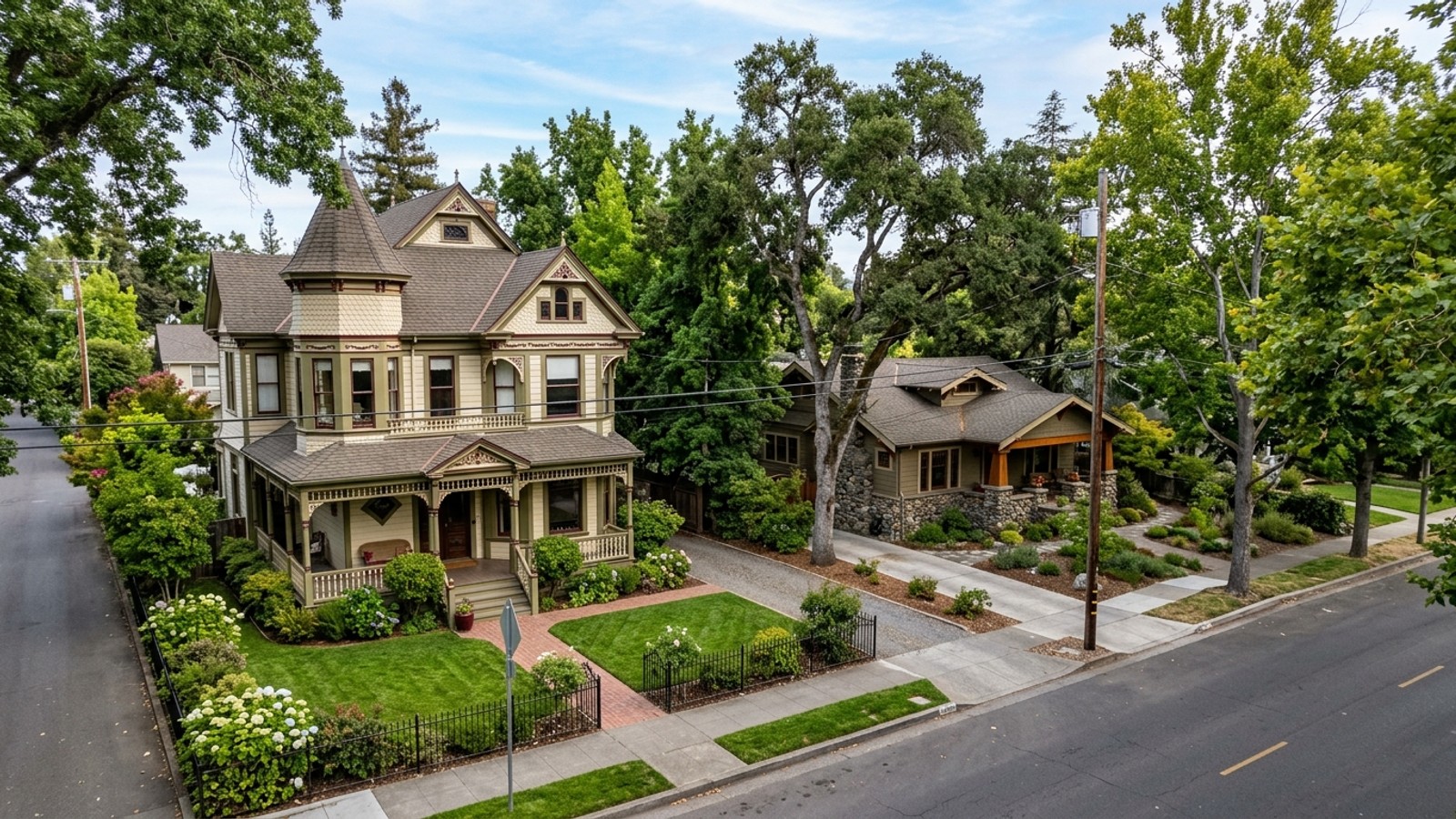
There’s real architectural variety in the older parts of this city, and several districts have formal preservation status to protect it. The St. Rose Historic District features 19th and early 20th-century Victorian and Craftsman homes. You’ll also find the McDonald Historic District, the Cherry Street Historic District, and the Ridgway Historic District – each with its own character.
The West End and Railroad Square area has been a preserved historic district since 1996, and historic Railroad Square is listed on the National Register of Historic Places as an early-1900s commercial district. If you’re drawn to older construction, these are the neighborhoods worth walking before you make any decisions.
Local History Museums and Sites
The Luther Burbank Home and Gardens is a U.S. National Historic Landmark and California Historical Landmark No. 234. The site preserves Burbank’s original home, greenhouse, carriage house, and gardens – all still intact.
Then there’s the Church of One Tree Museum, which is exactly what it sounds like: a structure built entirely from the wood of a single redwood tree. Today it honors Robert L. Ripley, the Santa Rosa native behind the “Believe It or Not!” franchise. It’s a good reminder that this city has always had an outsized personality relative to its size.
Famous Residents and Local Claims to Fame
Luther Burbank spent over 50 years here developing new plant varieties – the bulk of his life’s work was done in Santa Rosa. Charles M. Schulz, the creator of the Peanuts comic strip, lived the last half of his life in the area. Add Robert L. Ripley to that list, and you’ve got a city that’s produced an unusual concentration of people who left a mark well beyond Sonoma County.
Frequently Asked Questions
Which Santa Rosa neighborhoods are officially designated as historic preservation districts?
The city has several. They include the St. Rose Historic District, the McDonald Historic District, the Cherry Street Historic District, and the Ridgway Historic District. The West End and Railroad Square area is also a preserved historic district.
What are the local restrictions for remodeling or expanding a historic home in Santa Rosa?
It depends on the specific property and where it sits. Homes within designated areas like the St. Rose Historic District or Railroad Square have to follow local preservation guidelines. Before you plan any major exterior work, talk to the city’s historical preservation office first.
Can buyers of historic Santa Rosa properties qualify for property tax reductions through the Mills Act?
Yes. California’s Mills Act allows local governments to offer property tax relief to owners of qualified historic properties. If you’re buying a Victorian or Craftsman home in one of the city’s historic districts, check with the local tax assessor to find out whether that specific property qualifies.
How does Santa Rosa’s history of wildfires impact current home insurance rates and building codes for buyers?
It depends on the exact location of the property. Homes throughout Sonoma County are subject to strict building codes aimed at fire resilience. Expect higher insurance premiums, and make sure you’ve verified your coverage options before you close.
Do homes in Santa Rosa’s older historic neighborhoods appreciate differently than newer construction in the area?
It depends on market conditions and the condition of the home itself. Properties in established areas like the McDonald Historic District often hold strong value because of their architecture and historical significance. The broader market is currently sitting at a median home value of roughly $750,000, but historic properties can vary widely from that figure.
Are sellers required to disclose a property’s local historical designation or past natural disaster damage to buyers in Santa Rosa?
Yes. California real estate law requires sellers to disclose known material facts about a property – including official historical designations like being in the Ridgway Historic District, and any past fire or natural disaster damage. Read every disclosure document carefully before you get to closing.