The median home price in Sonoma County sits near $800,000 this year, but that number hides massive variations between neighboring towns. Buyers looking at the corridor along Highway 101 often find themselves weighing two very different environments separated by just 15 miles.
Santa Rosa operates as the county seat and the commercial hub of the region, offering a large inventory of suburban and historic homes. Just to the north, Healdsburg functions as a premium, smaller-scale market centered around wine tourism and luxury properties. Choosing between the two comes down to your budget, your daily commute, and the type of community footprint you prefer.
Two Distinct Sonoma County Markets
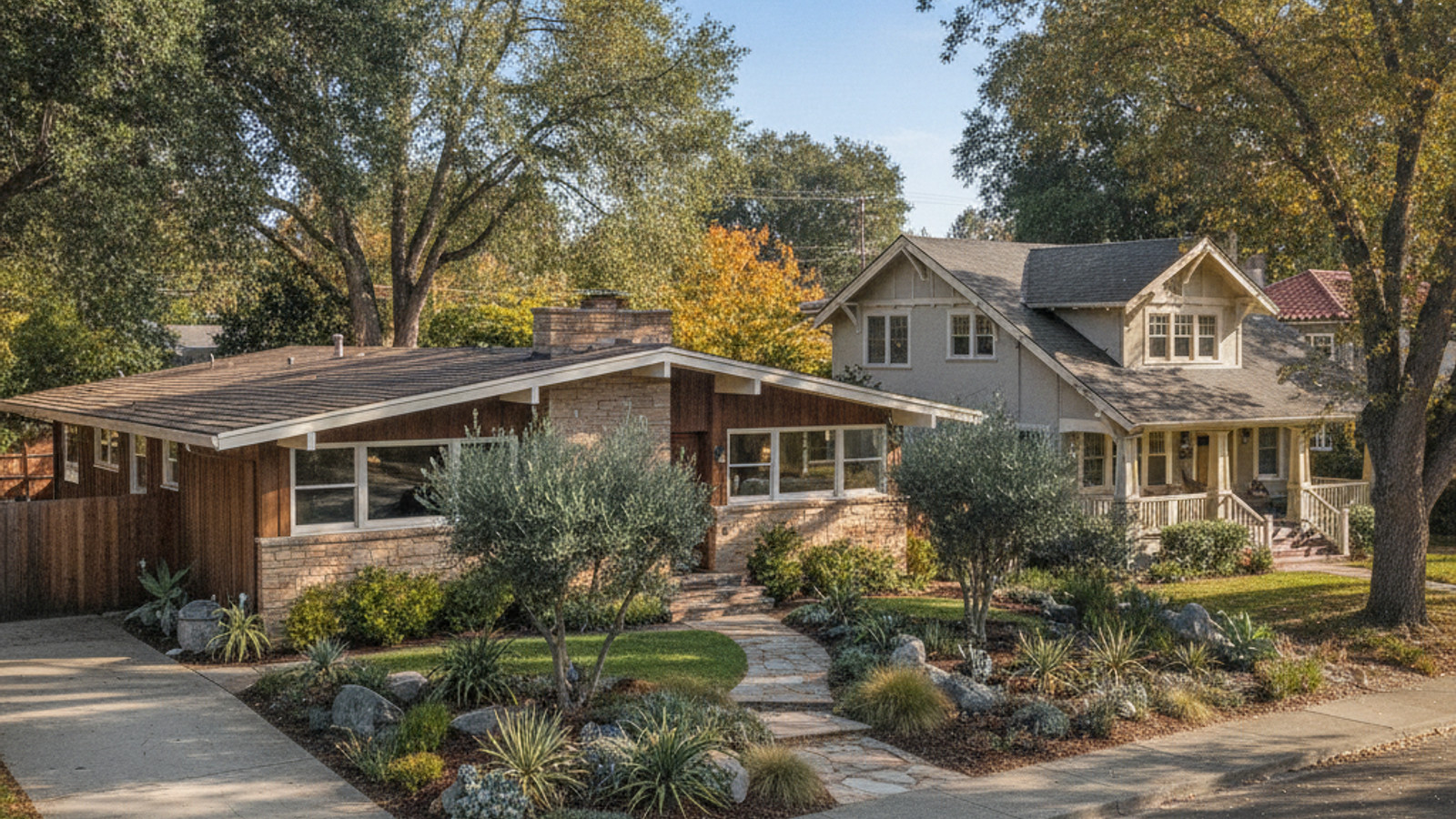
Santa Rosa covers over 40 square miles and houses the bulk of the county’s commercial infrastructure. The city supports a diverse economy spanning technology, healthcare, and government services. Buyers here find a wide spectrum of neighborhoods, from established mid-century tracts to newer developments on the city’s eastern edge.
Healdsburg sits further north along Highway 101, occupying a much smaller geographic footprint. The local economy revolves around high-end agriculture, hospitality, and a robust second-home market. The town centers around a historic plaza, creating a concentrated downtown area that draws both tourists and permanent residents.
Comparing Home Prices and Property Types
As of mid-2026, median home prices in Santa Rosa range between $750,000 and $800,000. The inventory here includes traditional single-family subdivisions, downtown historic homes, and townhome communities. Buyers with a budget under $850,000 will find the highest concentration of available listings within Santa Rosa city limits.
Healdsburg commands a clear premium, with median prices landing between $950,000 and $1,100,000. The housing stock consists largely of downtown historic bungalows, modern luxury estates, and large acreage properties just outside town. Strong demand for vacation properties and secondary residences keeps inventory tight and prices elevated compared to the rest of the county.
Highway 101 Commutes and the SMART Train
Most Sonoma County commuters rely on Highway 101 to reach major employment centers in Marin County and San Francisco. A typical morning drive from Santa Rosa to the Golden Gate Bridge takes about an hour, depending on departure time. Starting that same drive from Healdsburg adds another 15 to 20 minutes to the trip.
The Sonoma-Marin Area Rail Transit (SMART) system provides a rail alternative to driving. Santa Rosa residents can currently board the train at two local stations and ride south to Larkspur, where a ferry connects directly to San Francisco. This rail option changes the daily routine for many commuters who want to avoid highway traffic.
Healdsburg residents do not have active SMART train service yet. Field work for the northern extension began in March 2026, and passenger service to Healdsburg is targeted to open in late 2028. Until that station opens, residents in the northern part of the county must drive south to Windsor or Santa Rosa to catch the train.
Everyday Expenses and Local Taxes
Housing costs drive the primary financial gap between these two cities, but daily living expenses also differ. Santa Rosa offers a wider variety of big-box retailers, discount grocers, and everyday service providers. Healdsburg features more boutique retail and upscale dining, which generally translates to a higher baseline cost for local entertainment and meals.
Buyers should review these specific financial differences when budgeting for either city. Understanding local tax structures and daily fees helps clarify the true cost of ownership:
- Property Taxes: Both cities follow California’s base property tax rate, but special assessment districts and local bonds vary by neighborhood.
- HOA Fees: Santa Rosa has more planned unit developments and condo complexes, meaning buyers are more likely to encounter monthly homeowners association dues here than in Healdsburg.
- Utility Costs: Municipal water and sewer rates differ between the two jurisdictions, and buyers should request past utility bills during the disclosure review period.
- Retail Access: Santa Rosa residents spend less on gas for basic errands, as major hardware stores and bulk retailers operate within city limits.
Access to Parks, Wineries, and the Russian River
Santa Rosa provides immediate access to some of the largest public park spaces in the region. Spring Lake Regional Park and the adjacent Annadel State Park offer miles of hiking, mountain biking, and equestrian trails. These massive green spaces sit right on the eastern edge of the city, making outdoor recreation a daily option for residents.
Healdsburg offers a different outdoor experience focused on the Russian River and agricultural landscapes. Public access points along the river allow for summer kayaking, paddleboarding, and swimming. The town is also surrounded by three major wine appellations—Alexander Valley, Dry Creek Valley, and Russian River Valley—putting dozens of tasting rooms within a short bike ride of the city center.
The public squares in both cities dictate their social layouts. Healdsburg Plaza serves as the definitive town center, surrounded by tasting rooms, bakeries, and bookshops. Santa Rosa features multiple commercial hubs rather than a single focal point, spreading its restaurants and retail across downtown, Montgomery Village, and the Railroad Square district.
Local Schools and Medical Centers
Santa Rosa City Schools operates as the largest district in the county, managing over two dozen elementary, middle, and high schools. This scale allows the district to offer specialized magnet programs, extensive advanced placement courses, and dedicated arts campuses. Healdsburg Unified School District runs a much smaller operation, resulting in smaller overall student enrollment numbers and a more centralized community focus around its single main high school.
Healthcare infrastructure scales similarly between the two locations. Santa Rosa Memorial Hospital serves as a Level II Trauma Center, providing advanced surgical care and specialized medical wings for the entire region. Residents in surrounding towns often travel to Santa Rosa for major procedures and specialist appointments.
Healdsburg Hospital operates as a smaller, community-focused facility. It handles emergency services, routine procedures, and primary care for the northern part of the county. Residents requiring specialized treatments or long-term acute care generally commute to Santa Rosa or further south into the Bay Area.
Making Your Sonoma County Decision
Buyers prioritizing immediate SMART train access, shorter commutes to San Francisco, and a wider range of housing prices often prefer Santa Rosa. The larger inventory makes it easier to find specific property types, from entry-level condos to established single-family homes. The presence of major medical centers and extensive retail adds daily convenience.
Buyers who want a smaller-town environment with premium wine country amenities tend to select Healdsburg. The higher entry price brings proximity to the Russian River, a concentrated downtown plaza, and immediate access to world-class vineyards. The choice ultimately depends on whether you want the resources of a regional hub or the tailored lifestyle of a premium destination.
Frequently Asked Questions
Which city has lower median home prices, Santa Rosa or Healdsburg?
Santa Rosa offers a more accessible entry point for buyers in mid-2026. The median price in Santa Rosa runs between $750,000 and $800,000, while Healdsburg properties typically trade between $950,000 and $1,100,000. You will find far more listings under the $800,000 mark in the larger county seat.
Is the SMART train available in Healdsburg yet?
No, passenger rail service does not currently reach the town. Construction crews began field work for the northern extension in March 2026, and the station is expected to open in late 2028. Commuters must drive south to Windsor or Santa Rosa to board the train today.
How long is the commute from Santa Rosa to San Francisco?
Driving from Santa Rosa to the Golden Gate Bridge takes roughly an hour during standard traffic conditions. Taking the SMART train to the Larkspur ferry provides a predictable alternative that bypasses Highway 101 congestion. Adding Healdsburg to that drive tacks on an extra 15 to 20 minutes each way.