
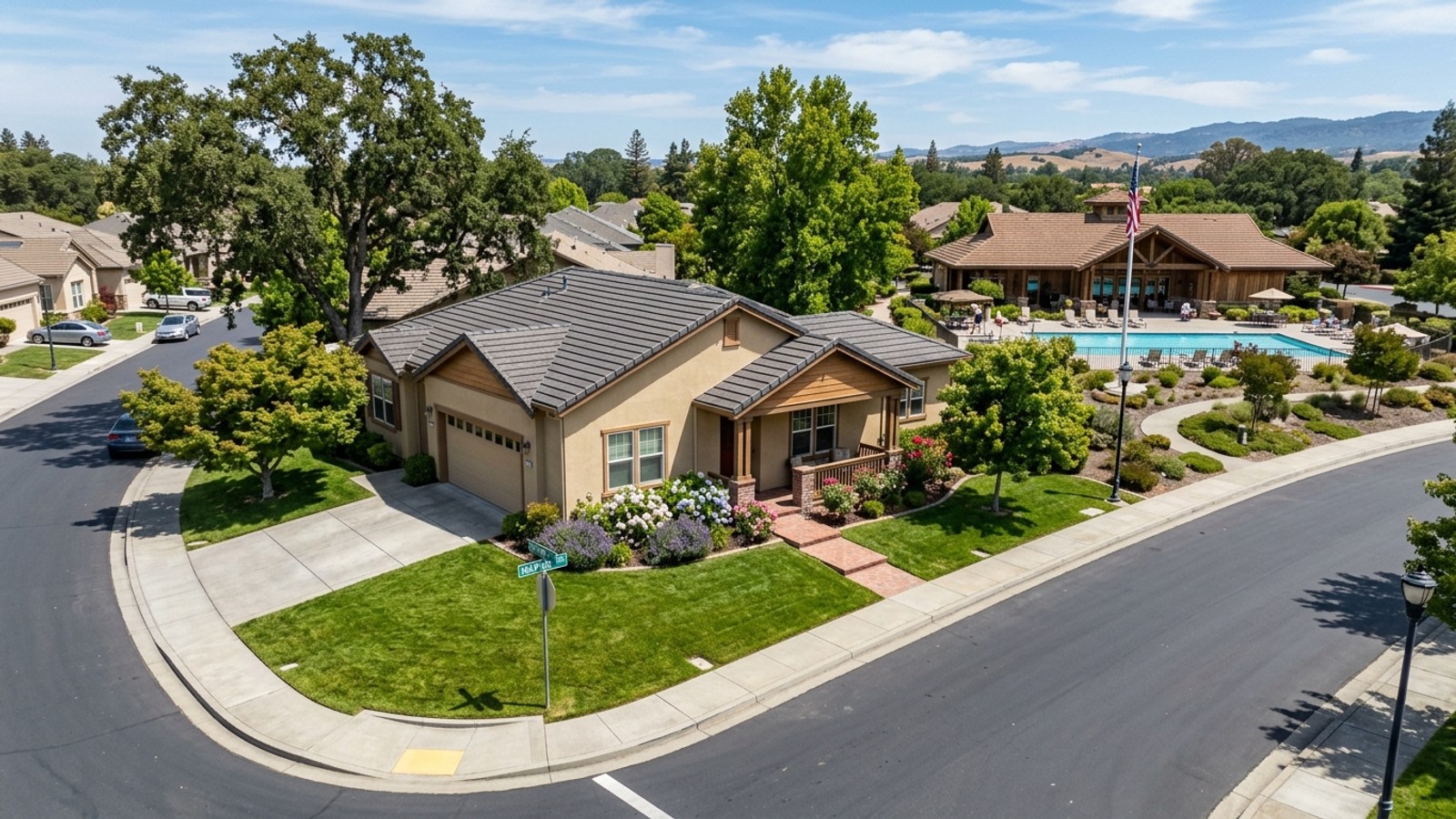
If you are considering living in Santa Rosa, CA, the median home price sits around $749,500 as of mid-2026. If you’re looking to downsize or move into a more specialized setup, you’re dealing with a market that has roughly 2.8 months of supply – tight enough that good properties don’t linger.
Before you start touring, it helps to understand how the local senior housing landscape actually works. Sonoma County runs the full spectrum, from independent living apartments to large-scale active adult neighborhoods, and the cost structures are completely different depending on which category you’re in. HOA fees, entrance costs, monthly rents – you’ll want to know what you’re comparing before you fall in love with a floor plan.
Housing Options for Seniors in Santa Rosa
The senior housing market here breaks into several distinct categories, and the differences matter more than most buyers initially realize. Some properties are built around active adults who want low-maintenance homeownership with no caretaking involved. Others have on-site medical staff and daily assistance baked into the monthly fee.
Eligibility usually comes down to age requirements set by state and federal law. Most properties follow the 80/20 rule – at least 80% of the occupied units must house at least one person who is 55 or older.
Independent and Assisted Living
Independent living facilities offer private apartments or cottages for people who don’t need daily medical help. You typically get shared amenities, group dining options, and scheduled transportation to local shops and restaurants.
Assisted living steps it up. Staff are on hand to help with medication management, personal care, and meals – so if those needs are on the horizon, that distinction matters when you’re choosing between communities.
Continuing Care and Active Adult Neighborhoods
A Continuing Care Retirement Community, or CCRC, lets you move between independent living, assisted living, and skilled nursing care without leaving the same campus. That continuity is the whole point – your care level adjusts as your needs change, and you’re not starting over somewhere new each time.
Active adult communities are a different animal entirely. These are ownership-based neighborhoods for buyers 55 and older, usually single-family homes or attached townhouses with clubhouses, pools, and organized activities. Think homeownership, not a care facility.
Notable Active Adult Communities in Santa Rosa
Santa Rosa has options across a wide price range – high-end continuing care campuses on one end, 55+ mobile home parks on the other. A large concentration of homes sits in the eastern foothills, though you’ll find properties spread across the city of Santa Rosa.
Inventory moves around, but recent data shows roughly 387 active listings across the broader Santa Rosa market. Homes in specialized 55+ neighborhoods tend to move quickly, particularly anything priced below the citywide median.
The Oakmont Village Area
Oakmont Village is one of the largest and best-known 55+ developments in north Santa Rosa. The neighborhood includes thousands of homes, ranging from attached duplexes to spacious single-family properties – so “Oakmont” covers a lot of ground, and prices vary accordingly.
HOA dues cover common area maintenance and access to multiple recreation centers. The community sits near state parks and local golf courses, which matters if outdoor access is part of what you’re looking for.
High-End and Affordable Alternatives
Varenna at Fountaingrove is on the high end – a CCRC with extensive amenities and entrance fees to match. If you want resort-style living with guaranteed access to future medical care built into the contract, that’s the kind of campus this represents.
On the other side, Santa Rosa has several 55+ mobile home communities that offer a lower entry point into homeownership. Just factor in the monthly space rent alongside your purchase price – it’s a real carrying cost that changes the math.
The Cost of Senior Living in Santa Rosa
What you’ll pay depends almost entirely on the type of property and the level of care involved. Buying a home in a 55+ neighborhood looks like a standard real estate transaction. Entering a care facility is a completely different fee structure.
For general context, apartment rents in Santa Rosa average between $1,900 and $2,500 per month, according to sources like RentCafe and Zumper. Dedicated 55+ apartment data isn’t widely published, so those citywide figures are the most reliable baseline for estimating independent living costs.
Entrance Fees and Monthly Dues
CCRCs in California typically start with an upfront entrance fee around $100,000, and they can go well past $1,000,000. Varenna at Fountaingrove specifically lists entrance fees ranging from roughly $609,000 to $4 million, with monthly fees between $5,600 and $10,000. That’s not a typo – this is a significant financial commitment.
If you’re buying into a resident-owned 55+ community instead, you’re looking at monthly HOA fees rather than an entrance fee. Statewide averages for California 55+ resident-owned communities sit around $332 per month, while newer developments in Santa Rosa can range from $200 to over $500 per month.
Medicare and Medi-Cal Assistance
Medicare doesn’t cover room and board or custodial care in assisted living. Those costs come out of pocket or through a long-term care insurance policy – worth knowing before you assume coverage exists.
Medi-Cal does offer some assistance through the Assisted Living Waiver (ALW) program for those who qualify. For 2026, the ALW caps room and board rates for SSI recipients at $1,444.07 per month, and residents get to keep a $182 personal needs allowance.
Retiring in Santa Rosa
Sonoma County attracts retirees for real reasons – the climate, the healthcare facilities, the proximity to the Northern California coastline. The financial side of the equation deserves equal attention.
Santa Rosa is expensive. Salary.com estimates that a single person needs about $3,544 per month in 2026, putting the city 43% above the U.S. baseline. That’s before you layer in housing costs specific to senior communities.
Budgeting for Local Expenses
Housing, utilities, groceries, and healthcare drive most of that premium. Local estimates put a single retiree’s monthly spend somewhere between $3,800 and $4,800, depending on their lifestyle and housing situation.
BestPlaces scores the city’s cost of living at 151.8 – meaning expenses run nearly 52% higher than the national average. If you’re relocating from out of state, run these numbers with a financial advisor before you commit. Retirement savings that felt solid somewhere else can look different against a Santa Rosa budget.
Weighing the Benefits and Drawbacks of 55+ Communities
Age-restricted neighborhoods offer something that’s hard to quantify until you experience it – a predictable environment built around the same stage of life. Amenities, social programming, and sometimes healthcare services all come consolidated onto one property.
The low-maintenance designs reduce the physical work of homeownership, and the built-in social structure matters more than people expect when they’re first shopping. Isolation is a real issue for older adults, and these communities are specifically structured against it.
Common Downsides
The financial commitment is the most common sticking point – especially the entrance fees tied to CCRCs. HOA dues can also increase over time, which hits harder when you’re on a fixed income.
Age restrictions limit your flexibility if adult children or younger family members ever need to move in. Read the governing documents before you close. The rules around long-term guests and underage residents vary by community, and you don’t want surprises on that front after the fact.
Selecting and Touring a Community
Visiting in person and reviewing the financials aren’t optional steps – they’re the whole job. A 55+ home purchase deserves the same scrutiny as any real estate transaction.
The average home in Santa Rosa spends roughly 40 days on the market. That’s a short window.
Schedule tours early so you can compare amenities, unit sizes, and the physical condition of the grounds side by side – not from memory after the fact.
Questions to Ask on a Tour
Ask about the history of HOA fee increases and the current state of the reserve fund. A well-funded reserve means the community can absorb major repairs without hitting residents with sudden special assessments. A thin one means the opposite.
For care facilities, ask about staff turnover rates and exactly what services are included in the base monthly fee. Knowing what triggers an extra charge is the only way to accurately project what you’ll actually spend over time.
Frequently Asked Questions
What are the average monthly HOA fees for 55+ retirement communities in Santa Rosa?
Average monthly HOA fees typically range from $200 to over $500. Statewide data for California 55+ resident-owned communities shows an average of about $332 per month. Newer developments in Santa Rosa tend to fall on the higher end of that range.
Can I buy a home in a Santa Rosa senior community if I am under 55 but my spouse is older?
Yes, in most cases you can purchase a home if your spouse meets the age requirement. California properties generally follow the 80/20 rule, which requires that 80% of the units have at least one occupant who is 55 or older. Check the specific community’s bylaws to confirm their exact occupancy rules.
How do home prices in Oakmont Village compare to other active adult neighborhoods in Santa Rosa?
Prices in Oakmont Village vary widely because the community includes everything from attached duplexes to large single-family homes. The median sale price for the broader Santa Rosa market is roughly $749,500, and homes in 55+ neighborhoods often price below this median depending on size and condition.
Am I allowed to rent out my property in a Santa Rosa 55+ community if I eventually move into assisted living?
It depends on the specific community’s HOA rules. Some neighborhoods restrict renting entirely, while others allow it as long as the tenants meet the 55+ age requirement under the 80/20 rule. Review the governing documents before you purchase if leasing the home later is even a possibility.
Is there a waitlist to buy into the most popular active adult communities in Santa Rosa, CA?
It depends on the community and current market conditions. Santa Rosa has about 387 active listings and a 2.8-month supply of inventory across the broader market, meaning homes can sell relatively quickly. Popular CCRCs like Varenna at Fountaingrove may maintain their own internal waitlists for specific unit types.