
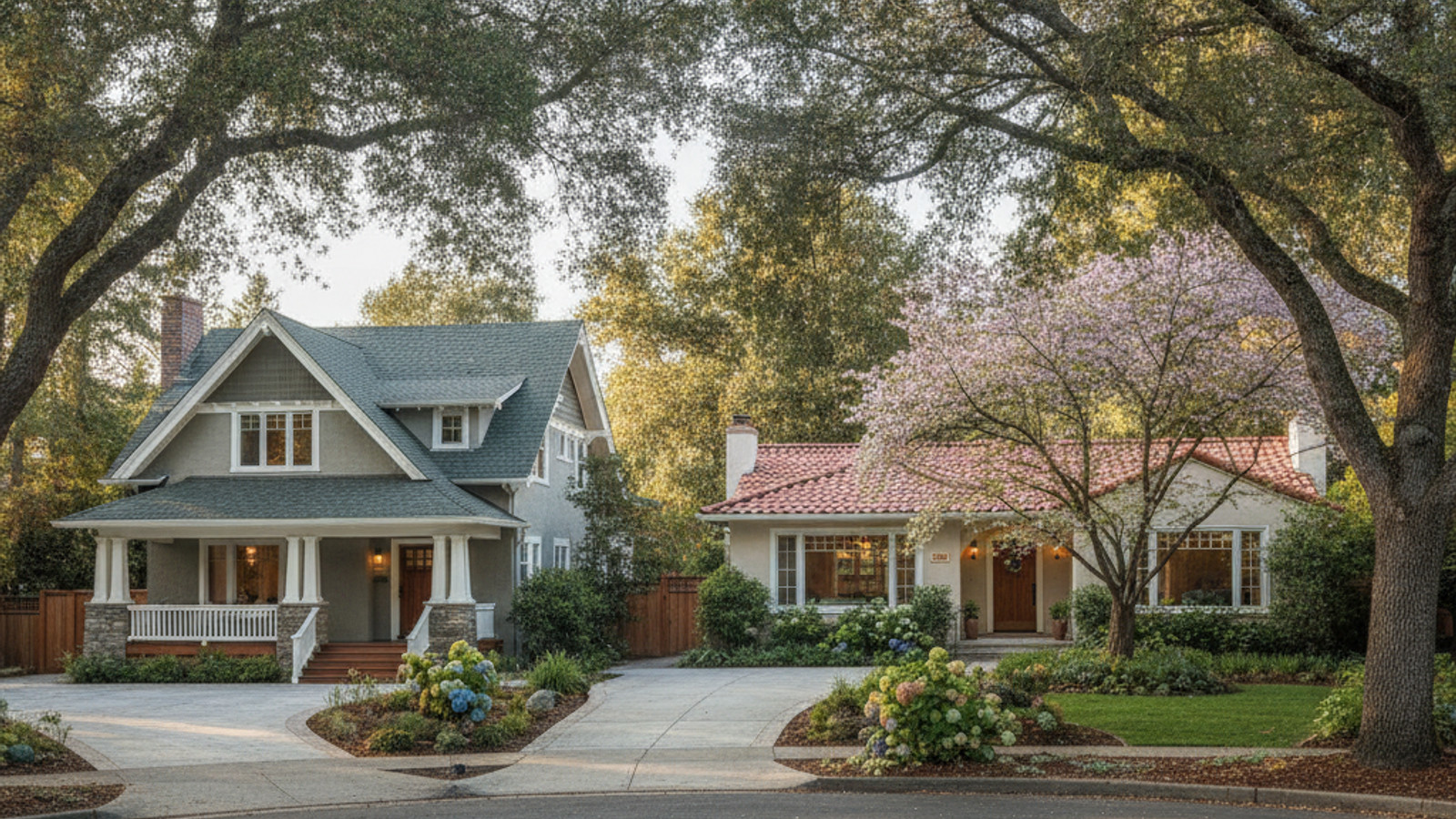
The median sale price in the Santa Rosa, CA housing market is roughly $750,000, and homes are moving in about 40 days. That’s a fast market, and buyers often focus so hard on getting their offer accepted that carrying costs become an afterthought. They shouldn’t be.
California’s tax laws work differently than most other states, and Sonoma County layers its own local bonds and assessments on top of the statewide baseline. Get a clear picture of the rates and due dates before you close – not after.
Current Property Tax Rates in Santa Rosa, CA
The average effective property tax rate in Santa Rosa falls between 1.16% and 1.27%. That number blends California’s statewide base rate with local voter-approved bonds that fund municipal services.
It’s actually a bit lower than the overall Sonoma County average, which sits at approximately 1.33%. Where exactly you land within that range depends on the school district bonds and infrastructure levies tied to your specific address – and those can shift from one neighborhood to the next.
How Proposition 13 Limits Year-Over-Year Changes
Under California’s Proposition 13, the base tax rate is capped at 1% of the property’s assessed value. When you buy the home, the county establishes your assessed value – typically at your purchase price.
From that point forward, the assessed value can only increase by a maximum of 2% per year, no matter how fast market values climb. That’s why a neighbor who bought their house twenty years ago might be paying a fraction of what you will, on a street where both homes look identical.
Calculating Your Santa Rosa Tax Bill
Start with your purchase price. Since the median in Santa Rosa is around $750,000, that’s a reasonable baseline for this example.
Apply the upper end of the local effective rate – 1.27% – to a $750,000 home, and you’re looking at an estimated annual tax bill of roughly $9,525. That amount gets split into two installments across the fiscal year.
One thing worth understanding before you start budgeting: the seller’s current tax bill is almost certainly not what you’ll pay.
Assessed Value Versus Market Value
Market value is what you agree to pay for the home today. Assessed value is the figure the county actually uses to calculate your taxes. When ownership changes hands, the county reassesses the property and resets the assessed value to the current market value.
If the previous owner held that home for decades under Proposition 13 protections, their tax bill could look nothing like yours. Always base your budget on your own purchase price – the seller’s tax records are essentially irrelevant to what you’ll owe.
Local Sales Tax and Additional Levies
Real estate taxes aren’t the only number to know. The combined sales tax rate in Santa Rosa, CA is 10.0%.
That 10.0% breaks down as the 6% California state rate plus additional taxes from the county, city, and special districts. It applies to retail purchases and to materials for home renovations, so if you’re buying a fixer and planning work right after closing, factor that in.
Estimating Taxes by Address
Special district taxes vary enough that the rate can actually differ from one street to the next. Properties in the 95404 ZIP code, for instance, may carry different local bonds than homes just outside the city limits.
The only reliable way to know what you’re actually buying is to pull the current parcel data through county records for that specific address. Don’t assume – look it up.
How to Look Up and Pay Your Sonoma County Bill
The Sonoma County Auditor-Controller-Treasurer-Tax Collector handles all billing and payments for Santa Rosa properties. You can view and pay your bill online at sonomacounty.gov/acttc/pay-your-property-tax-bill-online.
Paying by e-check through the portal is free. A credit or debit card will cost you a 2.34% convenience fee. Mailed payments work too, but the online system gives you immediate confirmation – worth something when you’re tracking a deadline.
Important Deadlines to Remember
California property taxes come in two installments. The first is due November 1 and becomes delinquent after 5:00 p.m. on December 10. The second is due February 1 and becomes delinquent after 5:00 p.m. on April 10.
Miss those cutoffs and you’re paying penalties. Unsecured property tax bills operate on a different schedule – those go delinquent at 5:00 p.m. on August 31 each year.
Exemptions That Lower Your Assessment
California has a few programs that can reduce what you owe. The most common is the Homeowners’ Exemption, which reduces your assessed value by $7,000 on an owner-occupied primary residence.
A $7,000 reduction translates to roughly $70 to $90 in actual savings per year – not life-changing, but it’s free money and the process is simple. The property has to be your primary residence as of January 1 to qualify for that tax year.
Proposition 19 and Senior Transfers
Proposition 19 allows eligible homeowners – including those over 55 – to carry their existing lower property tax base to a new home, even if the new home costs more than the one they sold.
For long-time residents looking to downsize or move within Santa Rosa, this can represent real financial relief. The transfer can be used up to three times in a homeowner’s lifetime.
New Construction and Special Assessments
A newly built home or a property in a recently developed subdivision often comes with carrying costs that don’t show up in a standard tax estimate. New construction gets assessed on the land value plus the cost of the completed structure.
Once construction wraps and ownership transfers, the county issues a supplemental tax bill to cover the gap between the old assessed value of the vacant land and the new value of the finished home. Buyers who aren’t expecting it sometimes find it catches them off guard.
Mello-Roos and Community Facilities Districts
Newer neighborhoods in California are frequently part of a Community Facilities District – the mechanism commonly called Mello-Roos. These districts levy special taxes to fund local infrastructure like roads, schools, and parks.
Mello-Roos taxes appear alongside your standard property tax bill but aren’t calculated from your home’s assessed value. They’re usually a flat annual fee, and they can add hundreds or thousands of dollars to your yearly total. If you’re buying in a newer subdivision, check whether a Community Facilities District applies before you make any assumptions about ongoing costs.
Frequently Asked Questions
What is the average property tax rate for a new residential purchase in Santa Rosa, CA?
The average effective property tax rate in Santa Rosa is approximately 1.16% to 1.27%, which includes California’s 1% base rate plus local voter-approved bonds.
Which Santa Rosa neighborhoods have additional Mello-Roos taxes or special assessments?
Mello-Roos taxes typically apply to newer developments and subdivisions built to fund local infrastructure. You’ll need to check the specific property’s tax records through the Sonoma County portal to confirm whether a Community Facilities District fee applies to a particular address.
Can I transfer my low property tax base from another California county to a new home in Santa Rosa?
Yes. Under Proposition 19, eligible homeowners over the age of 55 can transfer their existing tax base to a new primary residence anywhere in California, including Santa Rosa.
How long after closing on a Santa Rosa property will I receive my supplemental tax bill?
Supplemental tax bills are issued after the county assessor records the change in ownership and updates the assessed value. That process can take several months after closing.
When are property tax payments due in Sonoma County, and what are the penalties for paying late?
The first installment is due November 1 and is late after December 10 at 5:00 p.m. The second installment is due February 1 and is late after April 10 at 5:00 p.m.
How do I apply for the Homeowners’ Property Tax Exemption after buying a house in Santa Rosa?
You submit a claim form to the Sonoma County assessor’s office. To qualify, the Santa Rosa home must be your primary residence as of January 1 of the tax year.