
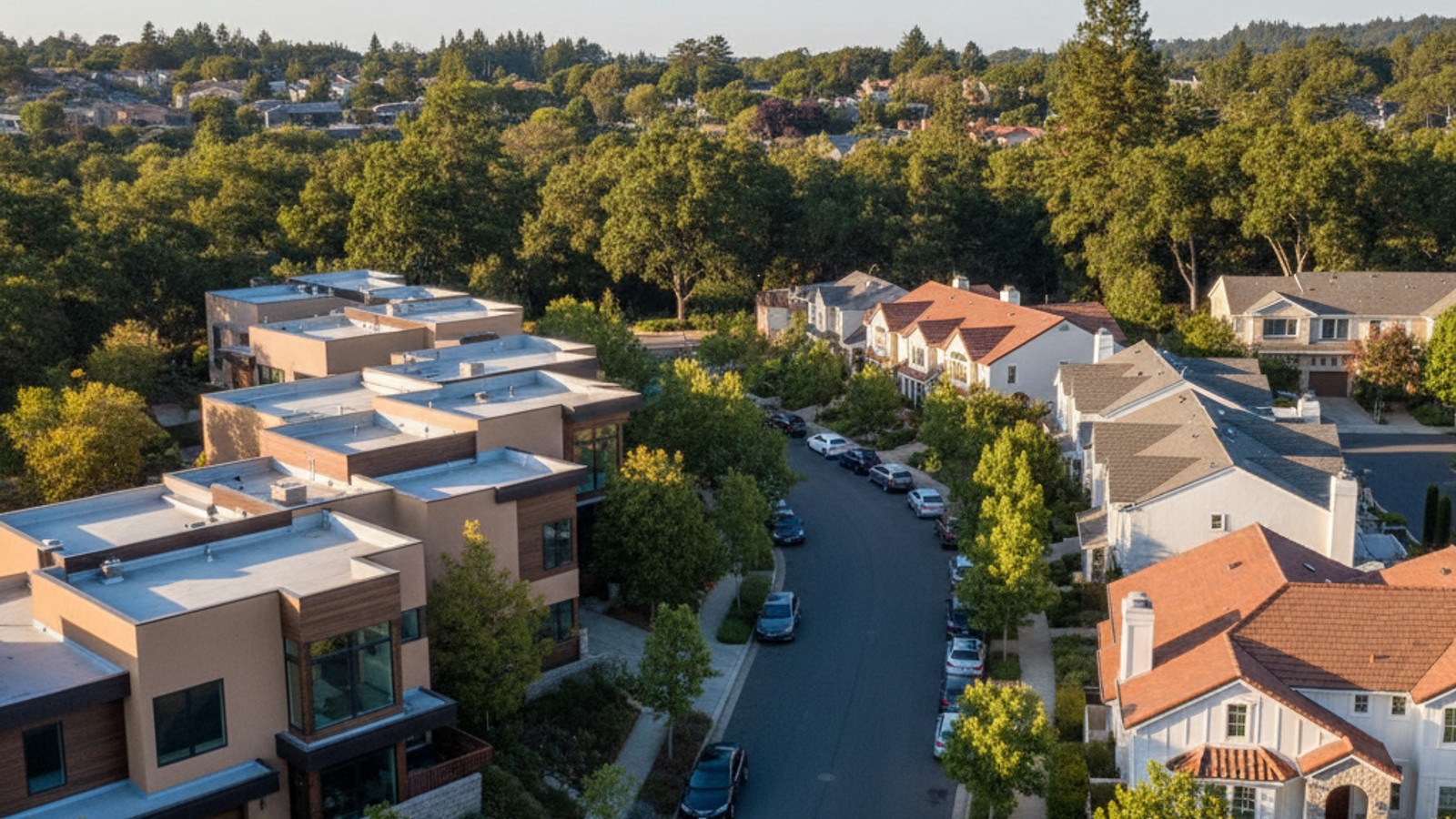
The Santa Rosa, CA housing market offers a dynamic landscape for buyers and sellers navigating Sonoma County real estate in 2026. Nestled in the heart of wine country, this city balances robust infrastructure with access to premier agricultural and recreational spaces. Understanding local inventory levels and pricing shifts is crucial for making an informed investment here.
Over the past few years, shifting interest rates and evolving local developments have fundamentally changed how properties change hands in the region. Success requires a clear grasp of current days on market, neighborhood-specific pricing, and the latest transit expansions.
Current Santa Rosa Housing Market Trends for 2026
As we move through the spring of 2026, the median sale price for homes in Santa Rosa sits at approximately $750,000. This figure represents a stabilization phase following the rapid price escalations seen in previous years. Buyers can expect list prices to hold relatively firm, though realistic asking prices have become the norm as sellers adjust to current mortgage rates.
Active listings have increased to around 300 properties, giving the city roughly 2.8 months of supply. Properties are currently spending an average of 39 days on the market before going pending.
This extended marketing time means buyers have a brief window to conduct thorough inspections and finalize loan contingencies without extreme pressure. My professional takeaway is that buyers currently hold moderate negotiation leverage, especially on homes that cross the 45-day mark. Sellers who price right the first time still secure strong offers, but those who overprice face immediate stagnation.
Analyzing the price per square foot across different zip codes reveals micro-market variations that buyers must watch closely. Properties in premium hillside locations naturally skew the average higher, while homes closer to the urban center offer more accessible entry points. Working with a dedicated buyer’s agent is essential to interpret these localized data points effectively.
Objective Property Types Available in Santa Rosa
The housing stock in Santa Rosa is heavily anchored by single-family detached homes, which dominate neighborhoods from Rincon Valley to Oakmont. New construction in the Fountaingrove area continues to introduce modern, energy-efficient options to the market.
For buyers focused on lower price points or reduced maintenance, condominiums and townhouses provide a viable entry path. These attached properties are frequently clustered near commercial centers and major transit corridors. Condos generally list well below the $750,000 median, making them highly relevant for first-time buyers managing current interest rates.
Property type directly dictates market accessibility and long-term carrying costs like HOA fees. The most compelling value in today’s market lies in established townhouses built in the late 1990s and early 2000s. These units offer an excellent balance of square footage and price per square foot without the premium attached to brand-new developments.
Existing homes in established neighborhoods often feature mature landscaping and larger lot sizes compared to newer subdivisions. Buyers evaluating these older properties must factor in potential renovation costs, particularly for updating aging HVAC systems or roofs. Ultimately, purchasing an existing single-family home offers the most direct path to building equity in this region.
Commute Times and Transportation Infrastructure
Mobility in Santa Rosa relies heavily on the US-101 and CA-12 corridors, which intersect near the city center. US-101 serves as the primary north-south artery, connecting residents to major employment hubs in Marin County and the broader San Francisco Bay Area. CA-12 provides crucial east-west access, linking the city to neighboring Sonoma Valley and Sebastopol.
The Sonoma-Marin Area Rail Transit system – widely known as the SMART train – has transformed regional commuting patterns. Two active stations within the city limits offer a rail alternative that bypasses highway congestion entirely, extending south to the Larkspur ferry terminal.
Properties located within a two-mile radius of a SMART train station consistently command stronger buyer interest. For local residents, utilizing the rail network for regional travel is the most efficient transit strategy available in 2026. Bypassing the US-101 bottlenecks during peak morning hours saves significant time and reduces daily commute stress.
Beyond rail and highway access, the city continues to invest in expanding its network of dedicated bicycle lanes. These infrastructure improvements connect residential zones to commercial centers, offering a viable alternative for shorter daily trips. Properties situated near these protected corridors often see a subtle boost in buyer interest due to the added transit flexibility.
Proximity to Key Local Amenities
Access to major outdoor recreational spaces is a defining feature of the local real estate landscape. Spring Lake Regional Park and Trione-Annadel State Park anchor the eastern edge of the city, offering miles of hiking and cycling trails. Homes situated near these park boundaries frequently see higher demand due to the immediate access to these sprawling natural reserves.
Healthcare infrastructure also plays a central role in property valuation and neighborhood selection. Santa Rosa Memorial Hospital serves as a major regional trauma center, prompting medical professionals to seek housing within a short radius to minimize commute times.
Proximity to these specific amenities adds measurable resilience to property values, even during slower market cycles. Buyers consistently prioritize homes within a five-minute drive of either the state parks or the hospital network. Purchasing a home near these permanent civic anchors remains one of the smartest ways to protect long-term real estate equity.
Santa Rosa City Schools and Educational Infrastructure
The Santa Rosa City Schools district boundaries encompass a vast portion of the local housing market. This district operates numerous elementary, middle, and high school facilities distributed strategically across the city’s various quadrants. The specific location of a property dictates which of these educational facilities a resident will be assigned to.
Recent infrastructure bonds have funded significant upgrades to several campuses, modernizing classrooms and athletic facilities. Buyers carefully map out these attendance zones when evaluating active listings in the area. The availability of specialized academic programs at certain high schools drives targeted housing searches within specific neighborhoods.
Location within these specific district boundaries heavily influences local real estate demand and pricing velocity. Verifying the exact school assignment boundaries is a mandatory step before submitting an offer on any property.
Property taxes in the region directly support these ongoing educational infrastructure developments. Buyers should review the specific tax assessments tied to local school bonds when calculating their total estimated monthly mortgage payments. Understanding these localized tax implications ensures there are no surprises during the final stages of the loan approval process.
Frequently Asked Questions About the Santa Rosa Market
How is the housing market in Santa Rosa, CA?
The market in 2026 is steadily transitioning into a more balanced environment for both sides of the transaction. Homes are currently averaging 39 days on the market, giving buyers room to negotiate while sellers can still expect successful closings if they price accurately.
Why is Santa Rosa, CA so expensive?
Pricing is driven by strict geographic boundaries that limit new outward expansion and a high baseline cost for construction materials. The area’s proximity to the San Francisco Bay Area also sustains strong demand from relocating buyers. A median sale price of $750,000 reflects the premium placed on living in a major wine country hub with robust infrastructure.
When is the best time to buy or sell a home in Santa Rosa, CA?
Inventory typically peaks between late April and June, making this the optimal window for buyers seeking the widest selection of properties. Sellers often find the most success listing in early spring when buyer demand surges ahead of the summer months. However, well-priced homes in desirable locations sell consistently year-round regardless of seasonal trends.
Is now a good time to buy a home in Santa Rosa?
Current market conditions offer buyers a distinct advantage regarding inspection contingencies and seller concessions. With roughly 2.8 months of supply, you have the breathing room to view multiple properties before making a commitment.