
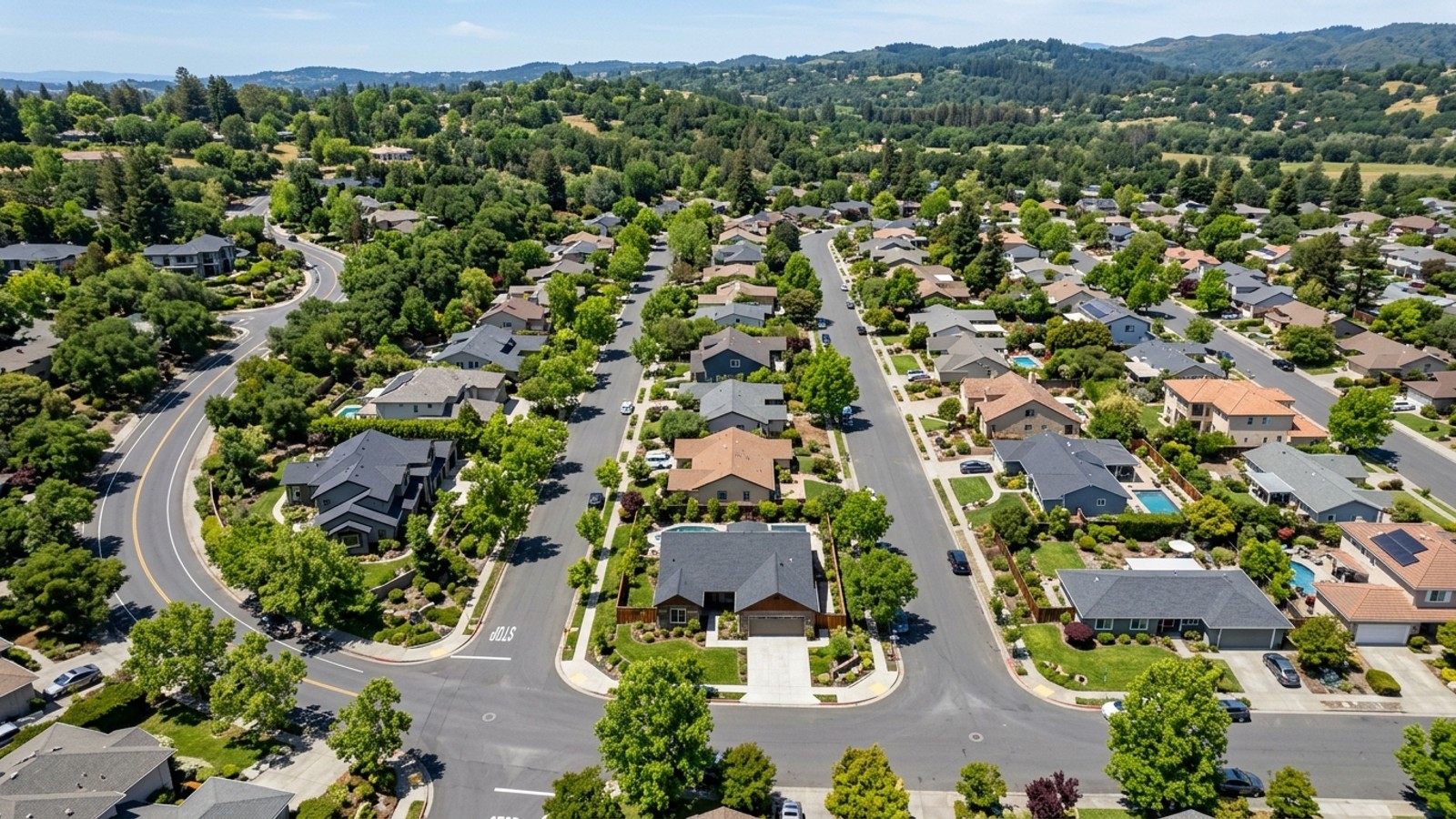
The median sale price for a home in Santa Rosa, CA is roughly $749,500, with available properties spending about 40 days on the market. If you’re shopping at that price point, you need to know what your monthly budget can actually handle before you schedule a single tour. This step is especially critical for first-time home buyers in Santa Rosa, CA entering the local market.
Figuring out your real price range involves more than plugging your salary into an online calculator. Sonoma County brings specific carrying costs into the picture – local property tax rates, and insurance requirements that look nothing like what you’d pay in Sacramento or San Jose.
The Math Behind Your Purchasing Power
Lenders look at your entire financial picture to set your maximum loan amount. They’re comparing the money coming in each month against the money already going out.
That ratio sets a ceiling on what you can borrow. Understanding how underwriters see your finances helps you set realistic expectations before you ever walk into a house.
Adding Up Your Monthly Income
The foundation of your budget is your gross monthly income – the total you earn before taxes, health insurance premiums, or retirement contributions come out of your paycheck.
Lenders count base salaries, hourly wages, and documented bonus structures. If you’re self-employed or commission-based, underwriters will typically average your past two years of tax returns to land on a reliable monthly figure. That’s worth knowing before you apply.
Factoring in Your Current Debt
Your debt-to-income ratio compares your gross income to your mandatory monthly debt payments – car loans, minimum credit card payments, student loans, child support. Every dollar tied up in existing debt is a dollar that can’t go toward your future mortgage.
Paying down a high-balance credit card or finishing off an auto loan before you apply directly increases the size of the mortgage you can secure. It’s one of the few levers you can actually pull before you get to the table.
Standard Mortgage Guidelines
Mortgage professionals use the 28/36 rule as a starting point. No more than 28% of your gross monthly income toward housing expenses, no more than 36% toward total debt.
Some loan programs allow those ratios to stretch higher. But staying near these percentages leaves breathing room for daily living – and a monthly payment that’s comfortable matters more than the maximum a lender is willing to hand you.
Variables That Shape Your Buying Limit
The purchase price is only part of the equation. The terms of your financing are what determine what you actually write a check for every month.
A buyer with a large down payment and strong credit can afford a higher purchase price than someone with the same income, less cash, and a lower score. Each of these variables moves your ceiling.
Choosing a Loan and Down Payment
Conventional loans, FHA loans, and VA loans all carry different down payment requirements and interest rate structures. A 20% down payment eliminates private mortgage insurance, but plenty of buyers purchase with 3% to 5% down.
A larger down payment directly lowers your loan principal and cuts your monthly payment. The tradeoff is your cash reserves – you’ll want to weigh the long-term savings of a smaller loan balance against what you’re holding onto for repairs, emergencies, and the general chaos of owning a house.
How Rates and Credit Scores Shift Your Maximum Price
Even a half-percentage point change in mortgage rates changes your monthly payment on a median-priced $749,500 home in a way that matters. When rates rise, your maximum affordable purchase price has to drop to keep the payment within your approved limit.
Your credit score is what determines the specific rate a lender will offer you. Borrowers with scores above 740 typically secure the lowest rates, which stretches how much house you can buy on the same monthly income.
Local Carrying Costs in Sonoma County
A mortgage payment includes principal, interest, taxes, and insurance. In Santa Rosa, the tax and insurance portions deserve real attention – they can add hundreds of dollars to your monthly obligation, and both of them directly affect what a lender will approve you for.
If taxes or insurance come in higher than expected, your maximum loan amount drops to compensate. It’s not a technicality; it changes what you can buy.
Factoring in Sonoma County Taxes
According to the Sonoma County Assessor’s Office, the overall property tax rate – including bond debt – averages 1.1% to 1.2% of a home’s assessed value. On a home purchased at the current $749,500 median, that’s roughly $8,200 to $9,000 in annual property taxes, divided by twelve and folded into your monthly payment.
Verify the specific rate for any neighborhood you’re considering. Special assessment districts can push that annual total higher, and the difference adds up fast over the life of a loan.
Standard Insurance and Wildfire Coverage
Standard homeowners insurance in California averages between $1,413 and $1,543 annually, though policies with high dwelling limits can reach $3,683. In wildfire-prone areas near Santa Rosa, costs run considerably steeper.
Many homeowners in high-risk zones – such as the 95441 ZIP code overlapping Geyserville – rely on the California FAIR Plan, which averages $11,900 a year for fire coverage alone. The FAIR Plan only covers fire, so buyers also have to purchase a second policy for liability and water damage. On top of that, the FAIR Plan has announced a 30% rate increase taking effect in October 2026. Factor all of that in before you fall in love with a property on the edge of the wildland interface.
Finding Assistance and Getting Pre-Approved
Buyers working to stretch their budget have access to several local options. The Sonoma County Community Development Commission provides up to $100,000 in below-market secondary financing for eligible SEIU-represented county employees. Burbank Housing administers a Down Payment Assistance program that can offer qualifying first-time buyers up to $200,000.
Current participants in the Sonoma County Housing Authority’s Section 8 program have an option to apply rental subsidies directly toward a mortgage. State-level programs like CalHFA’s MyHome Assistance can pair with these local funds as well.
The only way to know which programs you actually qualify for is to talk to a local lender. They’ll review your income, debts, and the specific property location and give you a concrete pre-approval letter – not a range, not an estimate.
Frequently Asked Questions
What annual salary do I need to qualify for a median-priced home in Santa Rosa, CA?
It depends on your down payment, interest rate, and current debt load. With the median sale price around $749,500, a buyer putting down 20% and carrying minimal debt will need a substantially lower salary than a buyer putting down 3% with significant student loan payments. There’s no single answer – the variables move together.
How do local property taxes and California wildfire insurance premiums impact my monthly housing budget in Santa Rosa?
Both get added to your monthly mortgage payment and directly reduce the size of the loan you can take on. If you’re buying in a fire-prone area where California FAIR Plan premiums average $11,900 a year, that extra monthly expense leaves less room in your budget for the actual purchase price.
Are there specific down payment assistance programs in Sonoma County that can help me afford a house in Santa Rosa?
Yes. Burbank Housing offers a Down Payment Assistance program providing up to $200,000 for qualifying first-time buyers. Eligible SEIU-represented county employees can also access up to $100,000 in secondary mortgage financing through the Sonoma County Community Development Commission.
How do HOA fees and Mello-Roos taxes in newer Santa Rosa neighborhoods affect my maximum loan approval amount?
Any mandatory neighborhood fees or special assessment taxes have to be factored into your debt-to-income ratio. Lenders subtract those monthly obligations from your available income, which lowers the maximum loan amount they’ll approve.
Will I be able to afford more square footage if I look in South Santa Rosa compared to more expensive areas like Rincon Valley?
It depends on the specific listing, but a lower price per square foot generally lets your approved budget go further. That said, always verify whether a less expensive area carries higher wildfire insurance costs – those premiums can offset a lower purchase price quickly.
Does buying a property with an existing ADU (Accessory Dwelling Unit) in Santa Rosa allow me to qualify for a larger mortgage?
It depends on the lender and the specific loan program. Some mortgage guidelines allow projected rental income from an ADU to count toward your qualifying gross income, which could increase your maximum loan amount. Ask your lender directly – the answer varies.