
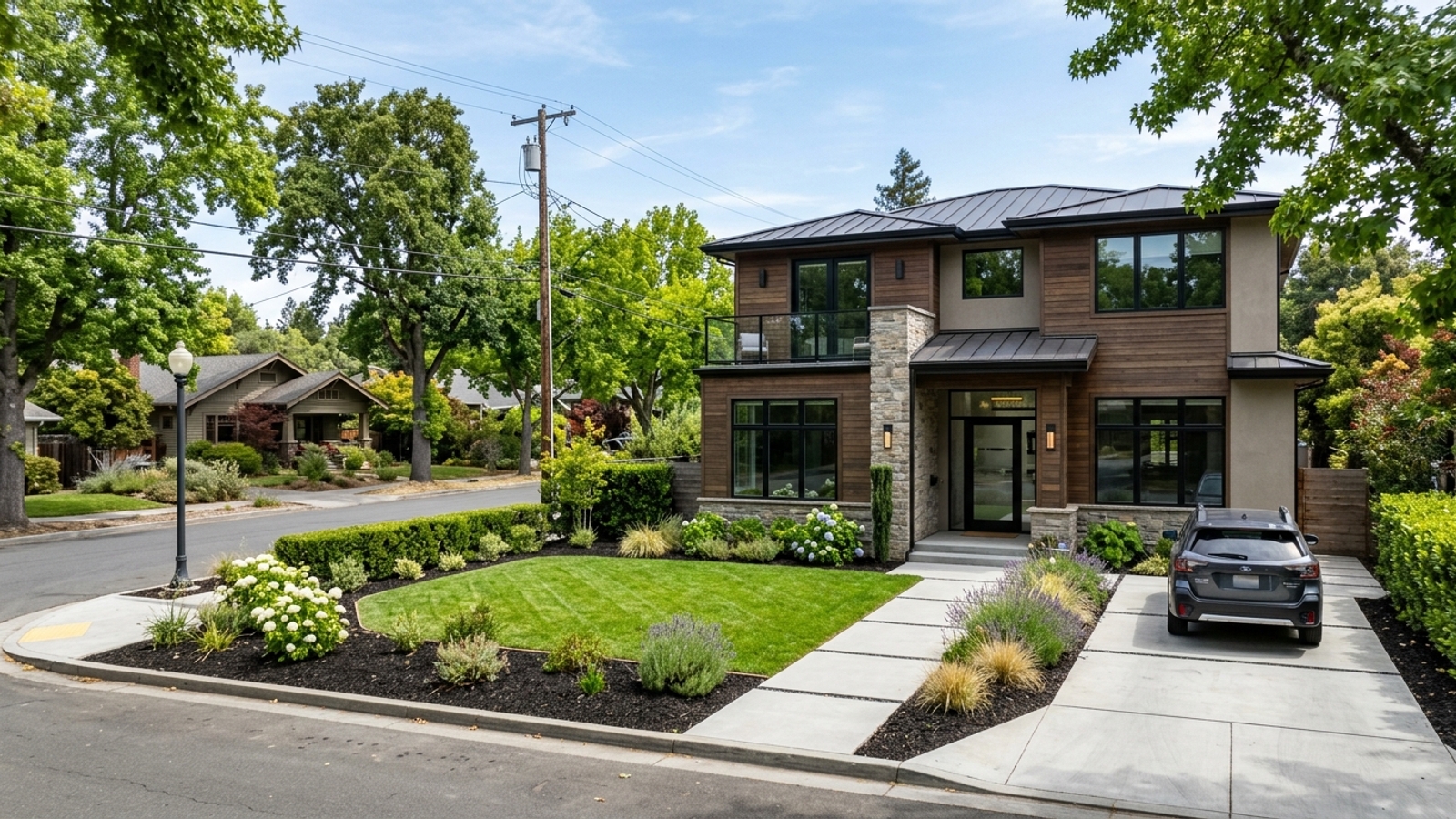
If you plan to sell a home in Santa Rosa, CA, the median sale price sits around $715,000 as of late summer 2026. Homes here spend an average of 40 days listed before going under contract, and roughly 32 percent of them sell above asking price.
That means you’re competing against 450 or so other listings in the area, and a deep clean alone won’t cut it. Staging helps buyers actually picture themselves living in the space – which tends to produce faster sales and stronger offers from people shopping Sonoma County.
Why Staging Your Santa Rosa Home Makes a Difference
The National Association of Realtors has found that staged homes routinely sell for 6 to 17 percent more than vacant properties, and that staging tends to shorten the time a house sits on the market.
There’s no single study calculating a precise return on investment specific to Santa Rosa. But the visual impact of a well-staged home translates directly to buyer interest here – because when a buyer can see how the furniture fits, they stop second-guessing the room’s scale and start imagining their own stuff in it.
Does staging help homes sell faster?
With the median days on market hovering around 40 in Santa Rosa, moving faster than that matters. Buyers scrolling listings online make split-second decisions based on photos, and staged rooms photograph better, plain and simple. More clicks mean more foot traffic at open houses.
Then, once buyers walk through the door, furniture placement guides their eyes toward the property’s best architectural features. That immediate positive impression is what prompts faster, more competitive offers.
Evaluating staging impact with local comps
The clearest way to understand what staging is worth in your specific situation is to pull comparable sales from the last six to 12 months in your neighborhood or subdivision – same bedroom count, similar square footage within 10 to 15 percent. A local agent can do this for you.
Look at the final sale prices and days on market for staged versus unstaged examples side by side. The numbers will tell you more than any general statistic.
What You Should Expect to Pay for Home Staging in Santa Rosa
Professional staging in Sonoma County typically runs between $2,000 and $4,500 for a standard 2,000-square-foot house. Pricing here tends to run above national averages, largely because of Bay Area labor and logistics costs – that’s just the reality of operating in this market.
That base price generally covers the initial consultation, furniture rental, and the labor to move everything in and out. Depending on the home’s total square footage and how much furniture is needed, full staging can sometimes reach up to $6,000.
Professional staging cost ranges
Most local staging companies start with an initial consultation, which typically runs $150 to $600. The stager walks the property, assesses what needs attention, and builds a proposal from there.
Vacant homes cost more to stage than occupied ones – the company has to supply every piece of furniture, art, and decor from scratch. If you’re trying to control costs, concentrate your budget on the spaces buyers weight most heavily: the main living area and the primary bedroom.
DIY staging on a budget
If you’re willing to do the work yourself, you can stage a home for the cost of a few minor upgrades and some rental items. Renting a storage unit to clear out excess furniture usually runs a couple hundred dollars a month and immediately makes rooms feel larger.
Fresh neutral paint, updated light fixtures, and new throw pillows can deliver a strong visual update for under $1,000. It takes more of your time, but it keeps out-of-pocket costs low.
Deciding Between Professional and DIY Staging
A vacant 3,000-square-foot house is a completely different challenge than a furnished two-bedroom bungalow. Your timeline, your budget, and the current condition of your furniture are what actually determine which route makes sense – not some general rule.
Sellers with high-end properties or unusual layouts tend to get the most out of professional help. If you already have modern, neutral furniture in place, you can usually handle it yourself with some targeted adjustments.
When to hire a professional stager
Professional stagers know how to scale furniture so a room reads as spacious rather than cramped. They carry an inventory of matching, contemporary pieces that reflect current buyer tastes – you don’t have to hunt down individual items or worry about whether things go together.
Hire a professional if your home is completely vacant. Empty rooms reliably look smaller in photographs than furnished ones. A professional is also worth the investment if your current furniture is heavily personalized, noticeably worn, or dated.
A realtor-approved DIY staging checklist
If you’re going the DIY route, start by removing anything that distracts from the house itself. Buyers should be looking at the floor plan and the finishes – not your family photos.
Follow these steps before photos and showings:
- Remove all family photos, diplomas, and personalized decor from the walls and shelves.
- Clear every countertop in the kitchen and bathrooms, leaving only one or two decorative items.
- Take out at least one-third of the furniture in the living room to open up walkways.
- Pack away off-season clothing so bedroom closets appear half-empty and spacious.
- Replace heavy drapes with sheer panels to maximize natural light.
Room-by-Room Staging Strategies for Sellers
Buyers don’t weigh every room equally. The main living spaces, the kitchen, and the primary suite carry the most weight when someone is deciding whether to make an offer. Focus your energy there, and the rest of the process stays manageable.
Living room and kitchen
The living room should make people want to sit down. Pull your seating away from the walls into a conversational grouping and use an area rug to anchor the arrangement.
The kitchen is about showing off available workspace. Clear the counters of small appliances, wipe down the cabinets, and add something simple – a bowl of fresh fruit or a vase of flowers on the island works fine.
Primary bedroom and bathrooms
The primary bedroom needs to feel calm. Dress the bed in crisp, white linens, add a few textured throw pillows, and clear the nightstands down to matching lamps. That’s it.
Bathrooms demand absolute cleanliness and almost nothing on the surfaces. Pull the daily toiletries off the shower and counters, hang fresh white towels, and make sure the mirrors and glass doors are spotless.
Curb appeal and entryway
The exterior forms a buyer’s first impression before they’ve even parked the car. Mow the lawn, trim back overgrown bushes, and apply a fresh layer of mulch to the flower beds.
Inside, the entryway sets the tone for everything that follows. Fresh paint on the front door, a clean welcome mat, and no shoes or coats piled in the foyer – those details signal that the whole house has been cared for.
Handling Occupied and Vacant Properties
Living in a house while it’s on the market means maintaining a showroom-level appearance while still going about your daily life. That’s genuinely hard. Vacant homes remove that daily stress but create a different problem: empty rooms feel cold and make it difficult for buyers to gauge scale.
Both situations are workable – they just require different approaches.
Tips for staging while you still live there
Rent a storage unit. Move extra furniture, out-of-season clothes, and daily clutter into it, not into closets buyers are going to open. Keep your in-home essentials in designated baskets that can disappear into a closet the moment a showing gets scheduled.
Depersonalize as much as you can while you’re still there. The fewer personal items on display, the easier the house is to keep tidy and the faster buyers can imagine it as theirs.
When virtual staging makes sense for a vacant home
Virtual staging adds furniture and decor digitally to photos of empty rooms. It costs significantly less than physical staging and helps online browsers understand what a vacant layout can actually hold.
The limitation is straightforward: virtual staging only does its job online. Buyers who show up for a tour will still walk through an empty house, so the floors, walls, and fixtures need to be in pristine condition. That in-person experience is what closes the emotional gap.
Local Home Staging Companies Serving Santa Rosa
Several established staging businesses operate in or around Santa Rosa. Wine Country Staging & Design has been working the North Bay Area for over 20 years and is a well-known option for local sellers. Staged Right is another Santa Rosa-based company that pairs traditional staging with color consulting and clutter removal.
California Home Staging, run by Kim Gibson, serves Sebastopol, Sonoma, Rohnert Park, Cotati, Petaluma, and Windsor with a focus on maximizing return on investment.
What to look for in a local stager
When you’re evaluating companies like Big Bang Staging, Homes Staged by Candice, or Make Your House A Home, start with their portfolio. You want to see examples of homes similar to yours in size and architectural style – not just beautifully staged luxury properties that have nothing in common with what you’re selling.
Ask whether they own their furniture or rent it from a third party. Companies that own their inventory generally have more flexibility with timelines and design choices, which matters when you’re trying to hit a listing date.
Home Staging FAQs
Does home staging help sell a house faster in Santa Rosa?
Yes, generally. The median time on market in Santa Rosa is 40 days, and national data shows staged homes frequently sell faster than vacant ones by helping buyers visualize the space.
How much does it cost to stage a house in Santa Rosa?
Hiring a professional stager in Sonoma County typically costs between $2,000 and $4,500 for a standard 2,000-square-foot house. The total depends on the home’s square footage and usually covers the consultation, furniture rental, and labor.
What’s the difference between hiring a professional stager and DIY staging?
A professional stager brings in their own contemporary furniture and handles all the design work and logistics. DIY staging means working with your existing furniture, renting storage for what doesn’t belong, and managing the decluttering and styling yourself.
What should I NOT do when staging my house?
Don’t leave personal items, family photos, or daily clutter on display. And don’t push all the furniture against the walls – it makes rooms feel empty rather than inviting, which is the opposite of what you want.
How should I stage a house I’m still living in vs. an empty one?
For an occupied home, the priority is aggressive decluttering and a storage unit for excess belongings. For an empty house, bring in rental furniture or hire a professional to give the vacant rooms a sense of scale and purpose.
How long does home staging take before I can list?
It depends on the property’s condition and the stager’s availability. After the initial consultation, a professional team can typically move furniture in and set up the home over the course of one or two days.
Is virtual staging enough for my listing in Santa Rosa, CA?
It depends on your strategy. Virtual staging produces strong listing photos that attract buyers online, but those buyers will still tour an empty house in person – and that in-person experience can break the emotional connection they felt from the photos.
Should I include staging expenses in my overall selling budget?
Yes, you should factor this upfront investment into your standard seller closing costs in Santa Rosa. While professional staging requires a few thousand dollars before listing, it frequently produces stronger offers that offset the initial expense.
Does home staging change my property’s actual value?
Staging does not change the structural facts used for a formal property valuation in Santa Rosa. However, presenting a clean and well-furnished space creates a strong positive impression that routinely leads buyers to submit higher offers.