
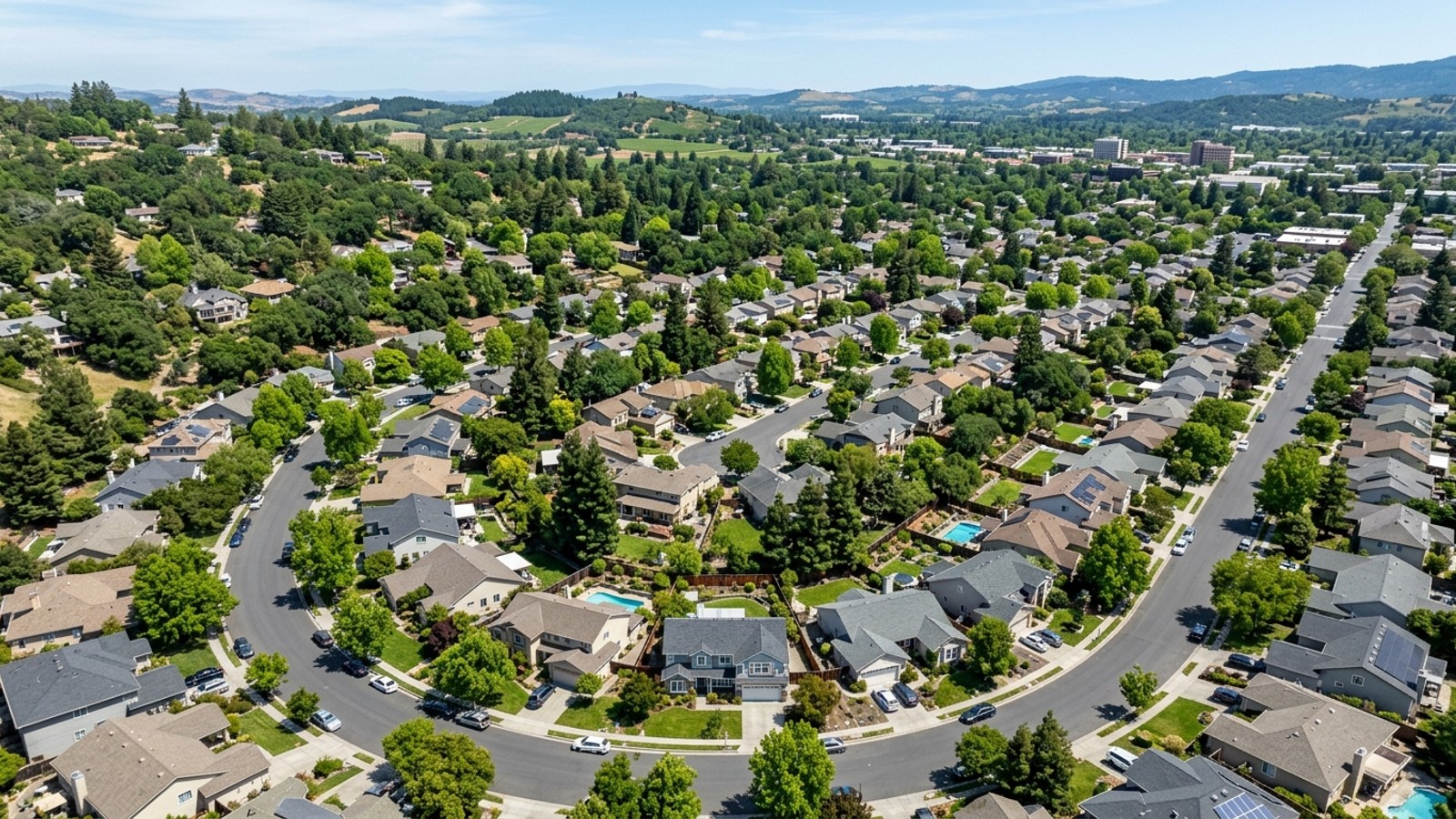
The median home sale price in Santa Rosa, CA is hovering around $750,000 as of mid-2026. Homes are selling in roughly 40 days and often closing slightly above asking – so if you are a first-time home buyer in Santa Rosa, CA getting serious about buying here, you need a clear handle on your total cash to close before you ever submit an offer.
Beyond the down payment, you’ll need to bring extra funds to the closing table for fees, taxes, and prepayments. Knowing exactly what those charges are lets you budget accurately and skips the unpleasant last-minute scramble before you get your keys.
What Are Closing Costs in California?
Closing costs are the fees and charges involved in finalizing a real estate transaction – the administrative, legal, and financial steps required to transfer ownership from the seller to you.
These fees go to third parties: lenders, title companies, local government offices. Every transaction has them. The exact lineup depends on where the property is located and how you’re financing the purchase.
Closing costs versus the down payment
Your down payment is the portion of the purchase price you pay upfront – it goes directly toward your equity in the property. Closing costs are separate, additional expenses required to process the loan and legally transfer the title. On your final settlement statement, both amounts get combined into the total cash you need to bring to the table.
Buyer costs versus seller costs
Both sides pay closing costs, but they pay for different things. Buyers typically cover expenses tied to securing a mortgage and establishing homeownership. Sellers generally handle the real estate agent commissions and specific local transfer taxes.
How Much Buyers Pay in Santa Rosa
Buyer closing costs in California typically run 2% to 5% of the home’s purchase price. One recent analysis puts the average closer to 2.1% of the sale price for buyers in the state.
On a median-priced $750,000 Santa Rosa home, that 2.1% average works out to about $15,750 in closing fees. Your actual total will shift based on your loan type, your down payment size, and the specific property taxes for the area.
Average percentages for California buyers
Most buyers land toward the lower end of that 2% to 5% range. In higher-value markets, the percentage tends to compress because many administrative fees are flat rates rather than percentages of the loan – a $300,000 loan and a $700,000 loan might carry identical appraisal and underwriting fees.
Why North Bay buyers see higher totals
The San Francisco Bay Area and North Bay carry higher home values across the board, which drives up the dollar amount of any fee pegged to the loan or purchase price – title insurance and loan origination charges being the obvious ones. Local city and county transfer taxes here are layered on top of standard state fees. Budget with local home values in mind, not national averages.
Buyer Closing Costs on a $100,000 to $600,000 Home
To estimate your cash to close, it helps to run the numbers at standardized price points using the state average of 2.1%. A $100,000 home is essentially nonexistent in Sonoma County, but the math scales up predictably as you move into higher price tiers.
These estimates assume a standard conventional loan and typical local property taxes. Your lender will send you a Loan Estimate within three days of your application – that document gives you a much tighter projection of your specific costs.
Sample cost breakdown by home price
Using the 2.1% average: a $100,000 purchase incurs about $2,100 in buyer fees. A $300,000 house pushes that to roughly $6,300. A $400,000 property lands around $8,400.
As prices climb toward the Santa Rosa median, the totals follow. A $500,000 home runs about $10,500 in buyer closing costs. A $600,000 house averages roughly $12,600.
How to calculate your own costs
Multiply your target purchase price by 0.021 for a quick baseline. If you want a conservative buffer that accounts for potential upfront property tax reserves or higher homeowner’s insurance premiums, multiply by 0.03 instead. Either way, you’ll have a working number before you sit down with a lender.
Breakdown of Buyer Closing Costs in Santa Rosa
The lump sum at closing is really a collection of individual line items. Those charges fall into a few main categories: loan processing, title transfer, government taxes, and prepaid property expenses.
Sonoma County has its own local customs around who pays for certain services. Understanding those regional standards will help you make sense of your closing disclosure when you finally see it.
Loan and lender fees
If you’re taking out a mortgage, your lender will charge fees to process, underwrite, and originate the loan. The appraisal fee – typically a few hundred dollars to confirm the property’s value – falls here too. You’ll pay these directly to the lender or to third-party appraisers.
Title insurance in Sonoma County
Title insurance protects against past defects or claims on the property’s legal ownership. In Sonoma County, custom dictates that the buyer pays for both the owner’s and the lender’s title insurance policies. That’s consistent with broader Northern California real estate practice.
Escrow fees and local customs
Escrow companies act as neutral third parties to hold funds and manage paperwork through the transaction. In Sonoma County, the buyer customarily pays the escrow charges – though if the seller insists on using a specific title or escrow agent, some local sources note the seller may end up covering all escrow fees.
Transfer and recording taxes
Local governments charge taxes to officially record the change in ownership. Sonoma County imposes a documentary transfer tax of $1.10 per $1,000 of the sale price. The City of Santa Rosa adds a local city transfer tax of $2.00 per $1,000, bringing the combined rate to $3.10 per $1,000. The seller customarily pays this.
Prepaids and escrow reserves
Lenders require you to fund an escrow account at closing to cover future property taxes and homeowner’s insurance premiums. You’ll typically prepay several months of these expenses upfront – that’s the lender making sure the bills get paid when they come due.
Who Pays Closing Costs in California?
The split between buyer and seller is driven mainly by regional custom, not state law. Everything is technically negotiable in a real estate contract, but standard local practice shapes the opening position. Northern California’s breakdown also looks different from Southern California’s – something worth keeping in mind if you’ve bought elsewhere.
Your agent will structure your offer based on Sonoma County norms from the start.
Costs the buyer customarily pays
In Santa Rosa, buyers generally cover loan origination fees, the appraisal, and credit report charges. Escrow fees and both title insurance policies also fall to the buyer under Northern California custom. Add prepaid property taxes and insurance reserves to that list as well.
Costs the seller customarily pays
Sellers cover the real estate agent commissions for both sides of the transaction. In Santa Rosa, they also customarily pay the combined city and county documentary transfer taxes. Any remaining mortgage balances or property liens tied to the seller get satisfied out of the seller’s proceeds at closing.
Having the seller cover buyer costs
You can ask the seller to pay a portion of your closing costs through a seller concession – this usually gets negotiated during the initial offer or after a home inspection surfaces needed repairs. The seller agrees to credit a specific dollar amount back to you at closing, which reduces the cash you need to bring. Conventional loans do cap those concessions, generally at 3% to 6% of the purchase price depending on your down payment.
Estimating Your Closing Costs
A flat percentage gives you a quick baseline, but a detailed calculation is what you actually want when you’re building a budget. Online tools and lender estimates can get you much closer to the real number.
The type of transaction also changes the math considerably.
Using a buyer closing cost calculator
A California-specific closing cost calculator lets you plug in your purchase price, down payment, and loan terms to get an itemized estimate. These tools factor in average local property tax rates and standard lender fees. Running your numbers before you submit an offer is worth the ten minutes it takes.
Estimating costs when paying cash
Cash buyers skip all loan-related fees – no origination charges, no lender title policy, no appraisal. You also avoid the requirement to fund a prepaid escrow account for taxes and insurance. In a cash transaction, your closing costs drop noticeably, often settling closer to 1% of the purchase price to cover the escrow service, owner’s title policy, and recording fees.
How to Reduce Buyer Closing Costs in Santa Rosa
The cash required to close isn’t fixed from day one. You have real options to lower out-of-pocket expenses before you sign – but they require some legwork.
Seller concessions and credits
Requesting a seller credit is the most direct lever you have. If a property has been sitting on the market, a seller might agree to cover $5,000 or $10,000 of your fees to get the deal done. Conventional loans cap seller concessions – typically at 3% to 6% of the purchase price depending on your down payment.
Lender credits and shopping for fees
You can ask your lender for a credit to cover some or all of your closing costs in exchange for accepting a higher interest rate. That reduces your upfront cash while increasing your monthly payment – a trade-off worth modeling out. You should also compare Loan Estimates from multiple lenders, because origination and underwriting fees vary more than most buyers expect.
Negotiating closing costs
Third-party fees like appraisals and government taxes are fixed. Lender fees often aren’t. Ask your loan officer to match a competitor’s lower origination fee or waive administrative charges. You can also shop for the most competitive title and escrow companies – just do it early enough in the transaction to matter.
Frequently Asked Questions (FAQ)
How much should I expect to pay in buyer closing costs on a house in Santa Rosa, CA?
You should expect to pay roughly 2% to 5% of the purchase price. On a median-priced $750,000 home in Santa Rosa, an average 2.1% rate translates to about $15,750.
Do buyers or sellers typically pay the county and city transfer taxes in Santa Rosa?
Sellers typically pay these. Local custom puts the combined $3.10 per $1,000 rate for the Sonoma County and City of Santa Rosa transfer taxes on the seller’s side.
Are there any local grants or programs to help first-time buyers in Santa Rosa with closing costs?
Check with local housing agencies or your lender for current programs. State and local payment assistance options change frequently, so verifying active grants directly is the only reliable approach.
How common is it to get seller concessions to cover buyer closing fees in the current Santa Rosa market?
It depends on the property and the situation. With homes in Santa Rosa selling in a median of 40 days and often closing slightly above list price, sellers on competitive listings may be less inclined to offer large concessions.
What are the most common hidden closing costs that catch Santa Rosa homebuyers by surprise?
Prepaid property taxes and insurance reserves catch a lot of buyers off guard. Lenders require you to fund an escrow account upfront at closing, which can add several thousands of dollars to your final cash requirement.
Can I roll my closing costs into my mortgage when buying a home in Santa Rosa?
It depends on your loan type and lender rules. Some loan programs allow you to finance certain fees, but buyers typically pay closing costs out of pocket or use lender and seller credits to reduce the upfront burden.